


Why Does Delegating Feel Riskier Than Doing It Myself?
When responsibility shifts faster than trust structures, managers default back to control.
A delegation block is a coordination design problem, not a trust failure.
It happens when authority is unclear and decisions route back to you by default. Work doesn't stop because people can't do it. It stops because the system doesn't know where judgment is allowed to land.
Most delegation friction traces back to one of four breakdowns:
- Decision rights are undefined — people don't know what they can decide.
- Ownership is vague — responsibility exists, but accountability isn't assigned.
- Constraints are missing — there's no "how far you can go" guidance.
- Escalation paths are inconsistent — everything becomes a manager decision.
This map helps you identify which structural element is missing so you can redistribute authority without creating chaos or losing control.
I need relief now
I want to understand the pattern

Start with your map.
When delegation keeps breaking down, the issue is rarely just capability or trust. It often reflects a deeper leadership pattern: how you define responsibility, where you place control, and what you step in to carry under pressure.
The Source Assessment helps you identify that pattern so you can see why work keeps routing back to you and what needs to change.
Take the Source Assessment
Is this your terrain?
When decisions keep bouncing back to you, the issue isn't follow-through or effort. It's a coordination breakdown caused by unclear decision boundaries.
Work can be assigned without authority being transferred. When that happens, people can move tasks forward, but they can't complete them. Decisions pause. Judgment escalates. Work loops back for confirmation.
Over time, this creates a coordination logjam — not because people are failing, but because the system doesn't clearly state where decisions are allowed to land.
If two or more of these are true, this is your terrain.
- Your team asks for approval on things you thought they could decide.
- Work stalls waiting for you even when people know what needs to happen.
- You're constantly clarifying "how far can I go on this?"
- People complete tasks but escalate the final call back to you.
- Decisions you delegated somehow end up back on your plate.
- Your team checks in excessively because boundaries aren't clear.
- You find yourself redoing work because the decision criteria weren't explicit.
- People say "I didn't want to overstep" when you expected them to decide.
- You're involved in decisions that should be routine by now.
If this is your terrain, you don't need more effort. You need a clearer map. Start with the framework that makes delegation boundaries navigable.
Delegation Map
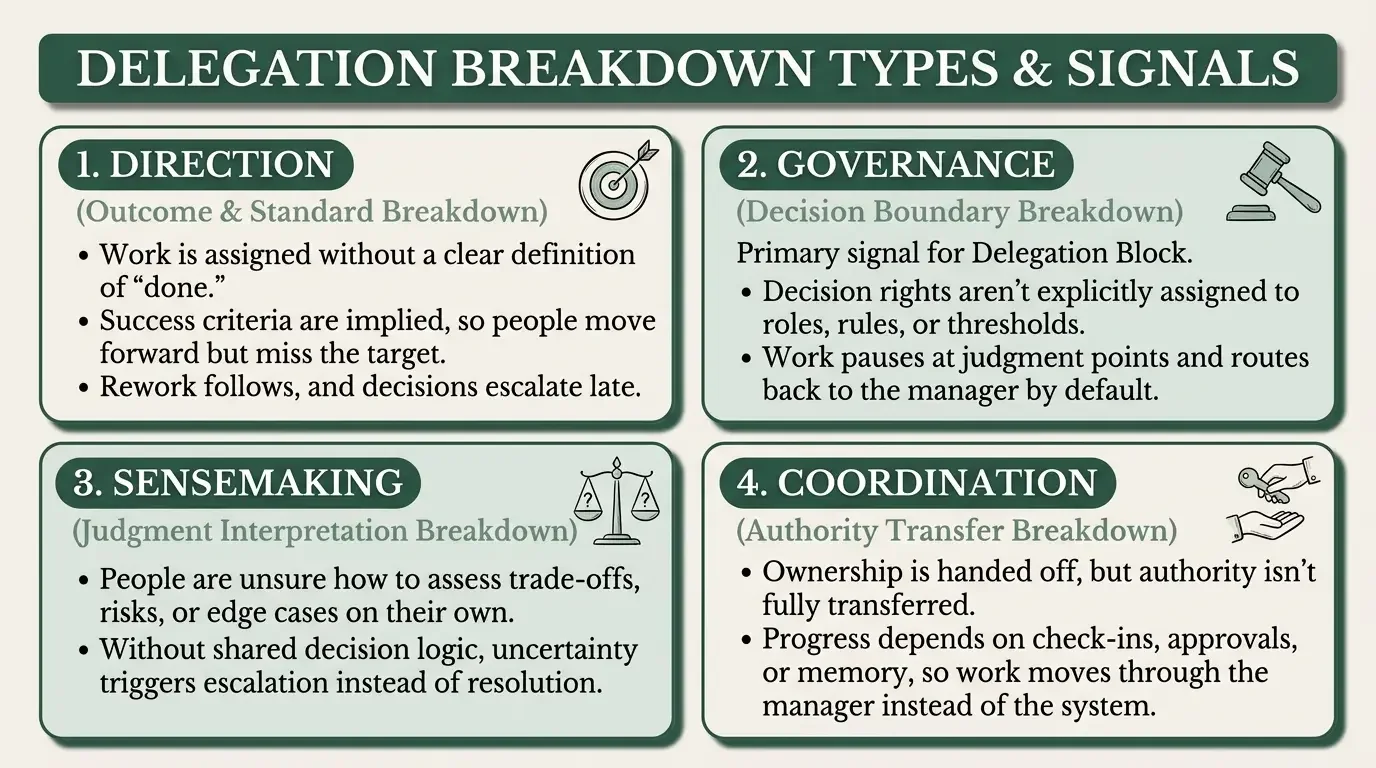
Most delegation blocks are driven by one dominant breakdown, even when others are present. Start by identifying where decisions stop moving on their own.
Delegation improves when decision rights are made visible, transferable, and trusted by the system — not held in your head.
Direction
Outcome & Standard Breakdown
- Work moves forward without a clear definition of "done."
- Success criteria are implied, not explicit.
- Decisions escalate because the target keeps shifting.
Governance
Decision Boundary Breakdown
- Decision rights aren't assigned to roles or thresholds.
- Work pauses at judgment points and routes back by default.
- Authority lives in the manager, not the system.
Sensemaking
Judgment Interpretation Breakdown
- People can't assess trade-offs or edge cases independently.
- Uncertainty triggers escalation instead of resolution.
- Decisions require manager presence to move.
Coordination
Authority Transfer Breakdown
- Ownership is handed off, but authority isn't.
- Progress depends on check-ins, approvals, or memory.
- Work moves through the manager instead of the system.
"Can you handle the vendor negotiation?" → [Person completes research but brings every decision point back to you]
- Direction"Final contract should reduce costs by 15% while maintaining service levels. Here's what 'good' looks like."
- Governance"You can approve up to $50K and terms under 2 years. Anything beyond that, escalate."
- Sensemaking"If they push back on payment terms, prioritize flexibility over discount. Here's the reasoning."
- Coordination"You own this decision. Keep me updated on progress, but don't wait for approval at each step."
Use this framework with structured tools, or understand why the pattern exists before committing to a solution.
What this sounds like in practice
Pick the scenario closest to what you're navigating this week. You don't need all of them right now.
When authority isn't transferred with the work
They complete tasks but escalate decisions back to you
When decision criteria are unclear
People escalate because they don't know the standard
When everything becomes a manager decision
No clear escalation path exists
The pattern: Transfer authority with work, make criteria explicit, create decision rules that reduce escalation.
Now choose how you want to move forward: Use this framework with structured tools, or understand why the pattern exists before committing to a solution.
Choose your route
There is no single right move here. It depends on where decisions are getting stuck.
Start Here If You Need Decisions to Land This Week
Use this route if work keeps coming back to you and you need decisions to land cleanly.
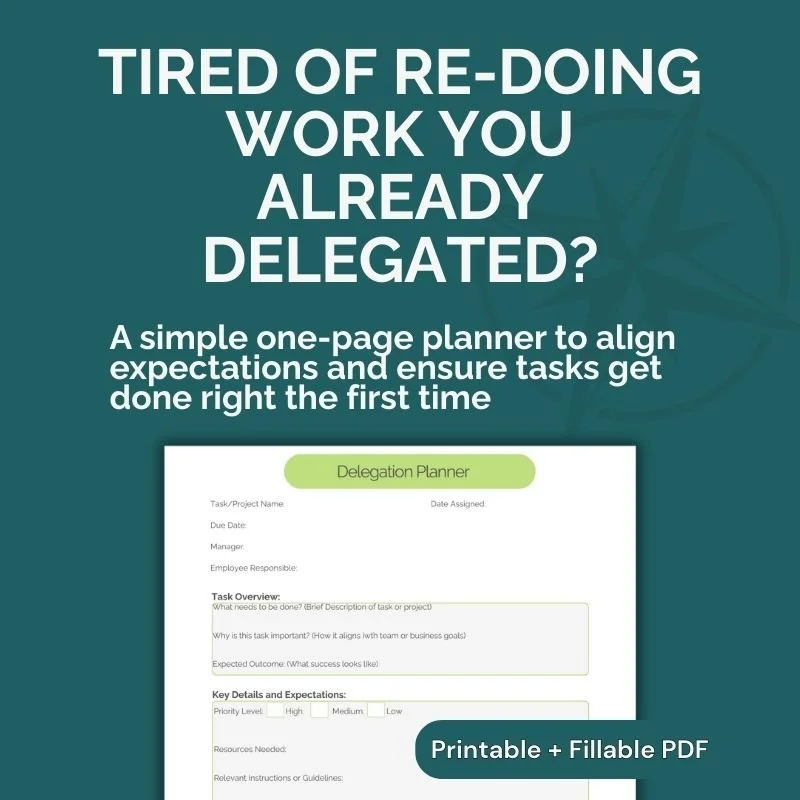
The Delegation Planner helps you clarify ownership and decision authority at the moment work is handed off, so progress does not stall or loop back for approval.
- Defines what the team owns and what they can decide
- Reduces rework caused by unclear expectations
- Allows work to complete without manager re-entry
Build Fluency Before Choosing a Tool
Use this route if you want to understand why decisions keep escalating back to you.
This route maps how authority, standards, and escalation rules are currently designed in your system, so you can fix the root cause instead of compensating for it week after week.
- See where authority is collapsing in your current system
- Understand why capable people still escalate decisions
- Learn what actually redistributes judgment without creating chaos

What is actually happening
Delegation breakdown emerges when decision authority is not clearly distributed through the system. This is not about effort or capability.
It is about how decisions are assigned, how judgment is transferred, and where work is allowed to complete. Most of the time, three predictable coordination frictions are at play.
Decision Accumulation
Decisions enter the system faster than they are resolved. Work moves forward until judgment is required, then pauses. Because decision rights are unclear, choices default back to the manager. Every open decision creates a dependency.
Authority Saturation
You are holding decisions that should be resolved by role, rule, or threshold. When authority is not explicitly transferred, the system escalates by design. Work does not fail. It waits. And you become the bottleneck without intending to.
Coordination Strain
Hand-offs lack decision clarity, so progress relies on check-ins, memory, or approval. Instead of moving through the system, work routes through you.
Once you identify which delegation block is active, your next move becomes clear. But first, you need to recognize the signal accurately.
When you're navigating a delegation block, your internal story is often reasonable. It's just incomplete. Here's how to read what the system is actually telling you.
When this terrain keeps repeating
If this keeps showing up across different situations, you might not need another tactic. You might need orientation. Your leadership Pathway shapes what you notice, what you prioritize, and what you misread under pressure.
You will get your Pathway orientation and next steps there.
Your interpretation. The likely signal.
| You think: | The system signal may be: |
|---|---|
| I just need to stay more involved. | Decision authority has not been clearly transferred, so the system routes judgment back to you. |
| People are unsure or hesitant to decide. | Decision boundaries are implicit, so acting carries risk without protection. |
| I have to double-check everything. | Standards and decision thresholds are not explicit, so completion is unclear. |
| Work keeps coming back for revisions. | Outcomes are defined, but decision rights about how to get there are not. |
| If I step back, things will stall. | The system relies on you to coordinate decisions that should be handled by role or rule. |
When this pattern repeats, the signal is structural, not individual.

Read The Manager’s Compass to diagnose the exact delegation pattern you are experiencing.
These frameworks help you identify where authority is collapsing. You will see whether the primary issue is decision boundaries, authority transfer, escalation rules, or coordination design.
Use the Terrain Surveys to locate the dominant breakdown before you decide what to change.

Read to The Manager’s Mind to hear how delegation failures show up in real leadership moments.
Each post traces a lived situation so you can recognize the signal in motion, not just understand it conceptually.
This is where the framework meets reality.



Read The History of Work to see how modern roles inherited delegation models that never redesigned decision authority.
These essays trace how roles, expectations, and coordination demands evolved so you can see how today’s overwhelm was structurally produced, not individually caused.
This is where the pattern gets historical context.
Toolkits
These tools are not meant to be used all at once. Each one addresses a different delegation signal that appears when authority is unclear or incomplete.
Start with the signal you are seeing most clearly right now. That signal tells you where decision authority needs to be reinforced first.
Delegation Planner
This one-page planner helps you define ownership and decision authority at the moment work is handed off, so progress does not stall or route back to you for approval.
Use this when work keeps coming back completed but not finished.
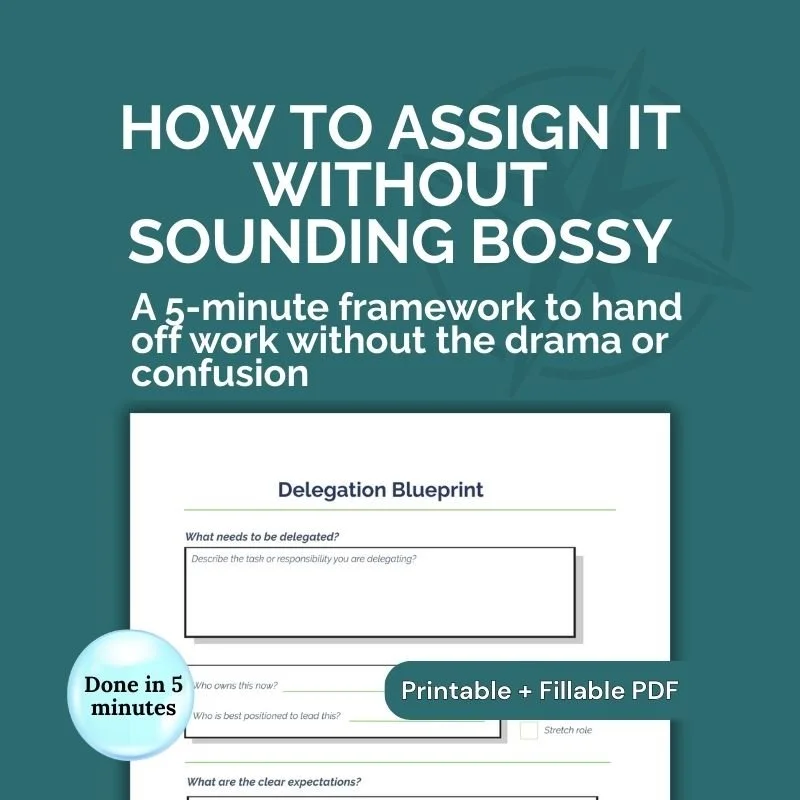
Delegation Blueprint
This framework helps you hand off work clearly without over-explaining or staying involved longer than intended. It focuses on how authority is communicated, not just what is assigned.
Use this when delegation conversations feel heavy or unclear before work even begins.
Related terrains you may be navigating
Delegation breakdowns often overlap with other system patterns in real work. If you are here, one or more neighboring terrains may be active as well.
Feedback Pattern Map
When decisions stall because expectations, standards, or judgment are not landing clearly or safely.
Former Peer Transition Map
When authority is still settling and delegation creates unexpected coordination and decision costs.
Time Management Map
When decision bottlenecks distort priorities and force constant re-planning.
Leading from the Middle Map
When decision rights, constraints, and expectations are not legible across levels.
Delegation Block Map
Before you choose a next move, here are four clarifying answers managers tend to need in this terrain.
Why do decisions keep bouncing back to me even when people are capable?
Because decision authority is not structurally defined. When ownership, constraints, or escalation paths are unclear, the system routes decisions back to you by default.
Is delegation breakdown a performance problem or a leadership problem?
It is usually a system-design problem. When authority boundaries, priorities, or decision rules are implicit, capable people hesitate or escalate to reduce risk.
Should I push people to take more ownership?
Not immediately. First, determine whether the work needs clearer decision rights, tighter constraints, or a defined escalation rule. Pushing ownership without authority increases delay and anxiety.
What does this page help me do differently?
It helps you identify where authority is collapsing, so you can redistribute decisions without creating confusion or adding more load to yourself.

Micromanaging is often a signal, not a flaw. This article explores the hidden system pressures that turn capable managers into bottlenecks, and how to read control as information instead of failure.