


The History of Work
Every management theory
on this shelf was invented
to solve someone else's problem.
In someone else's century.
We are still using them. The org chart, the performance review, the chain of command — all of it designed for a world that no longer exists. The History of Work traces where these ideas came from, what problems they were actually built to solve, and why applying them today produces exactly the friction you keep running into.
The map was never drawn for you in the first place.
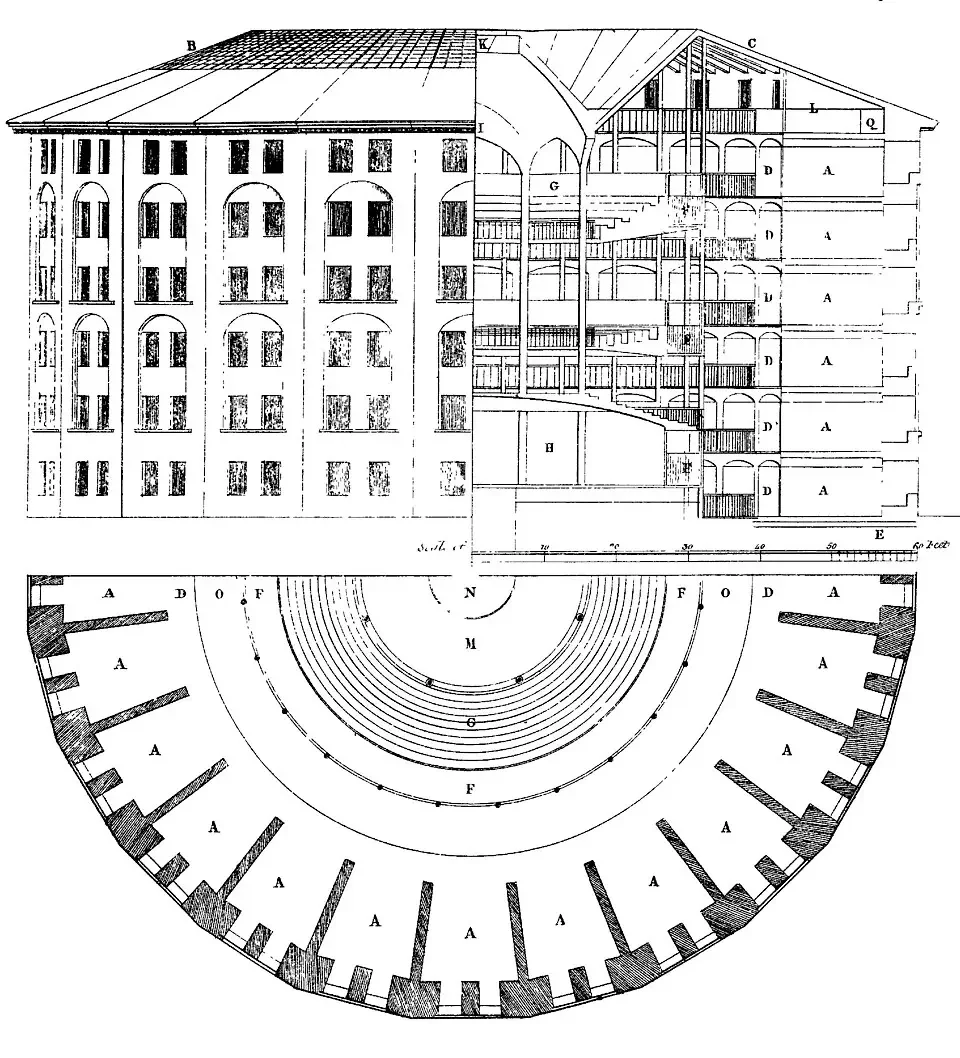
Management Began as a Watchtower
The supervisor's job began as a place to stand where every worker stayed visible. The platform became a glass office and then a dashboard, and the assumption underneath never moved.
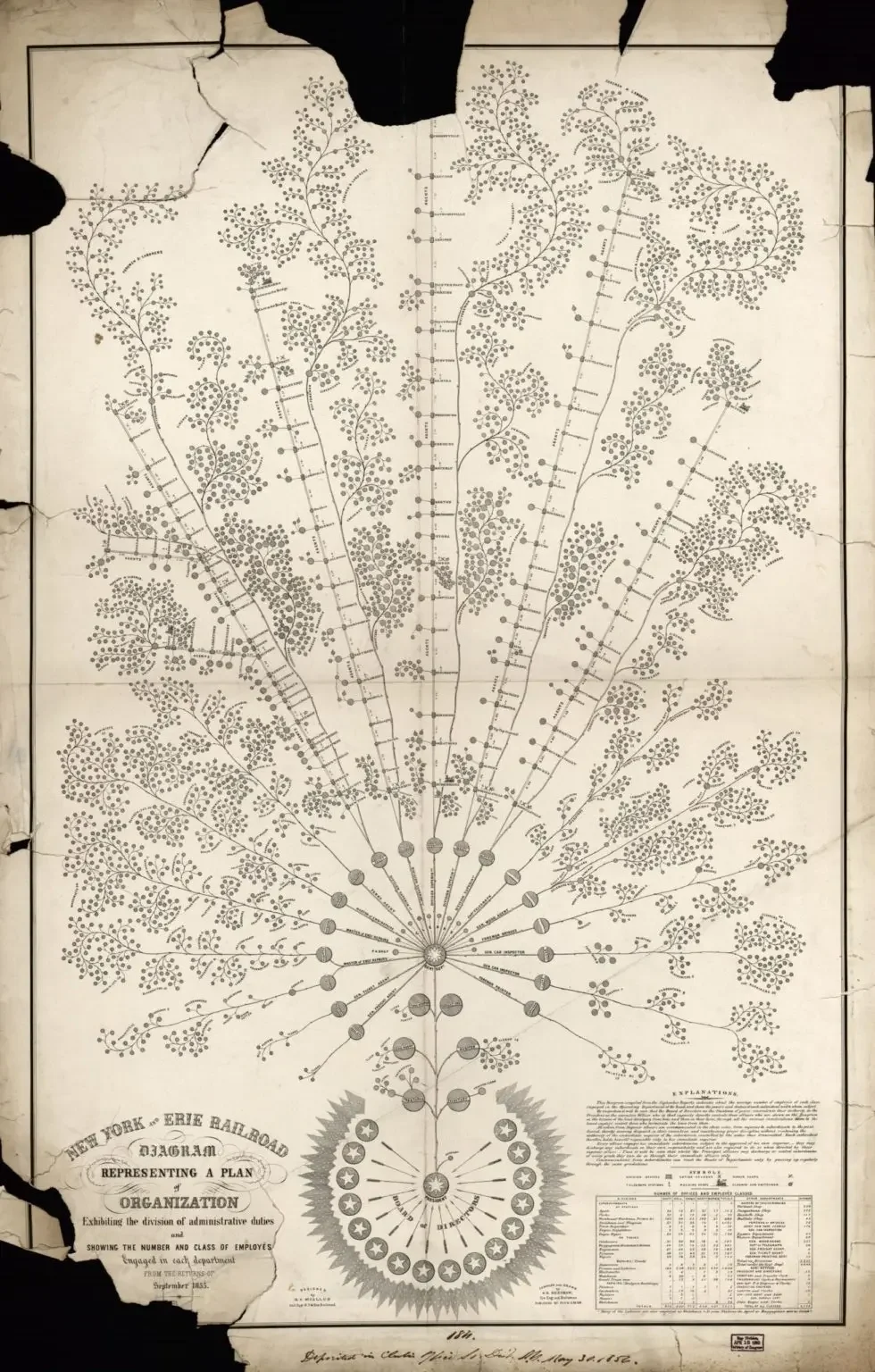
Point Out the Delinquent: What the First Org Chart Was Drawn to Do
In 1855, a bridge builder drew a diagram so one man could find the delinquent on a 500-mile railroad within the hour. Every reorganization you have ever survived is a redraw of his drawing, and it still has no line for the relationship between two boxes.
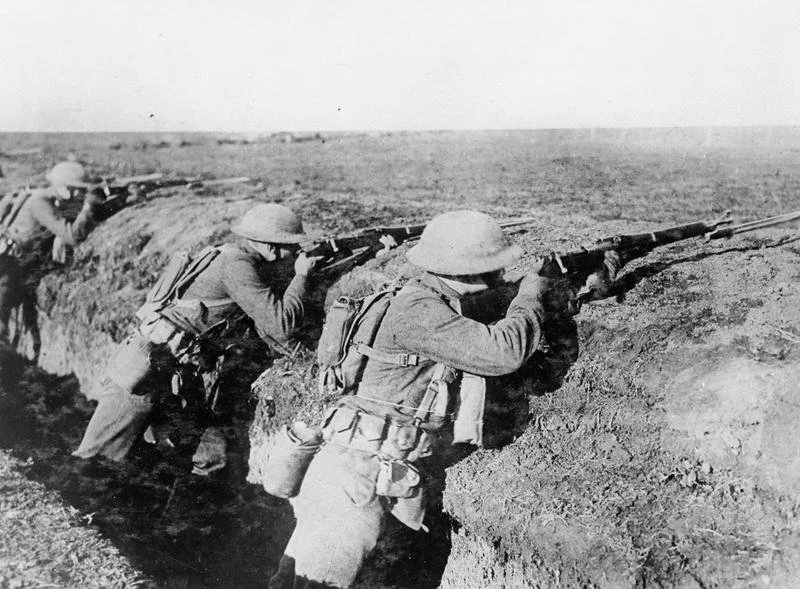
The Review Was Built to Decide Who Was Expendable
The performance review did not begin in an office. It began in an Army that needed to sort millions of men fast and decide who was expendable. The scale changed buildings. It never changed its job.
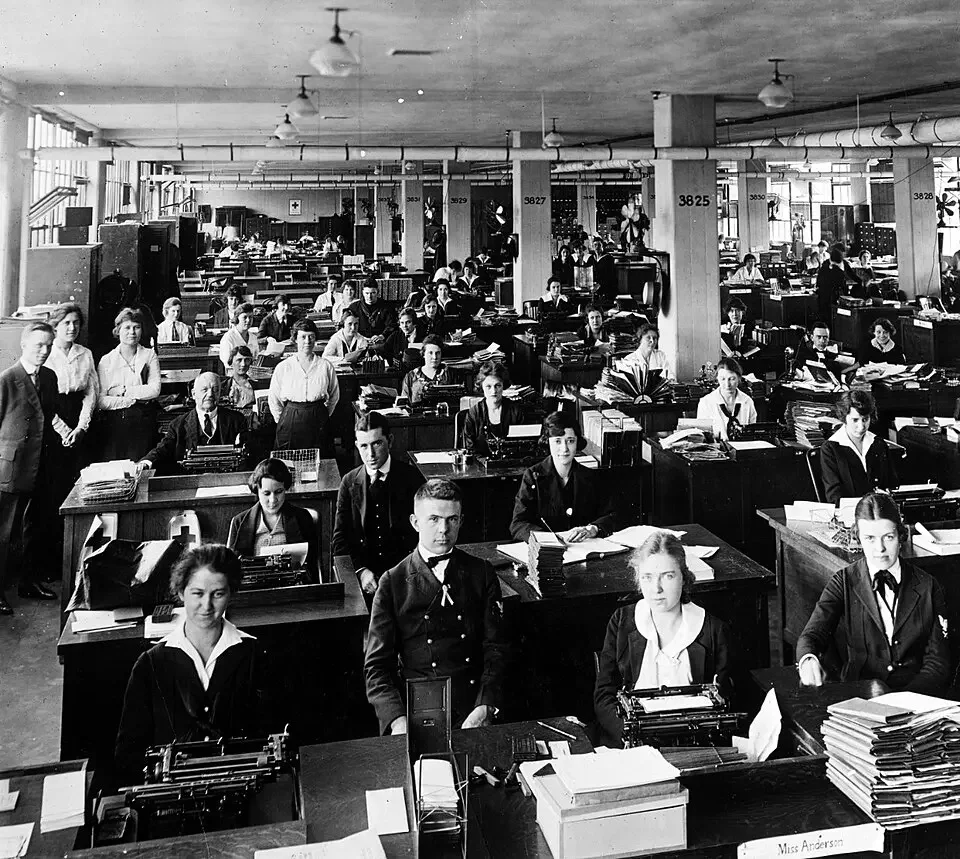
When the office became a factory floor
In 1917, William Henry Leffingwell published Scientific Office Management, the book that carried Frederick Taylor's factory methods into clerical work.