


The History of Work
Every management theory
on this shelf was invented
to solve someone else's problem.
In someone else's century.
We are still using them. The org chart, the performance review, the chain of command — all of it designed for a world that no longer exists. The History of Work traces where these ideas came from, what problems they were actually built to solve, and why applying them today produces exactly the friction you keep running into.
The map was never drawn for you in the first place.
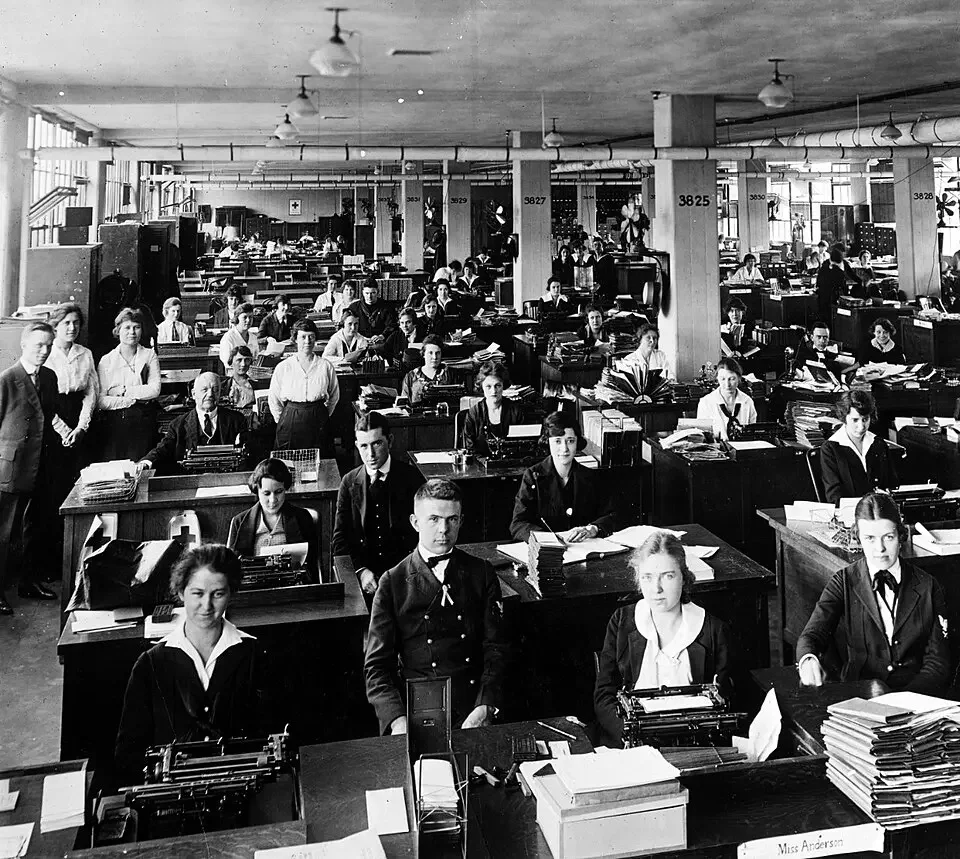
When the office became a factory floor
In 1917, William Henry Leffingwell published Scientific Office Management, the book that carried Frederick Taylor's factory methods into clerical work.
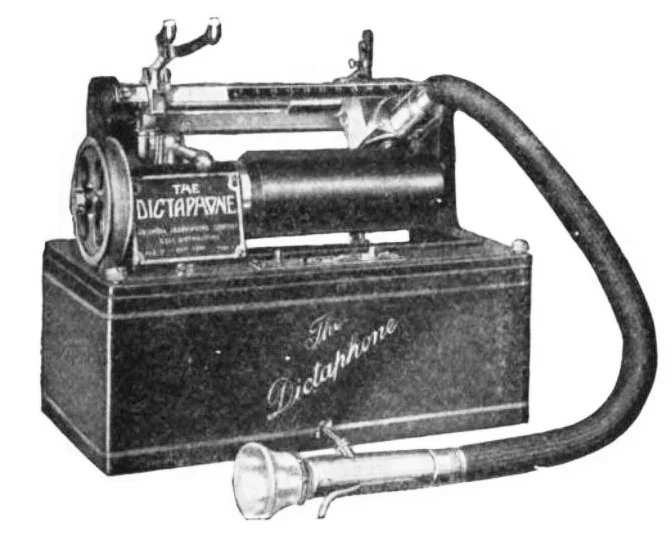
The Dictaphone: When the Boss’s Voice Arrived Without Him
In 1907, Columbia Graphophone gave every executive in America a machine that let him talk to his employees without ever speaking to them. The stenographer who used to sit across from her boss, asking questions in real time, now sat alone with a rubber listening tube and did her best to understand what the cylinder meant. That logic, that the manager's time and the worker's time don't need to overlap, still governs most workplaces today. Every async tool since has inherited it.
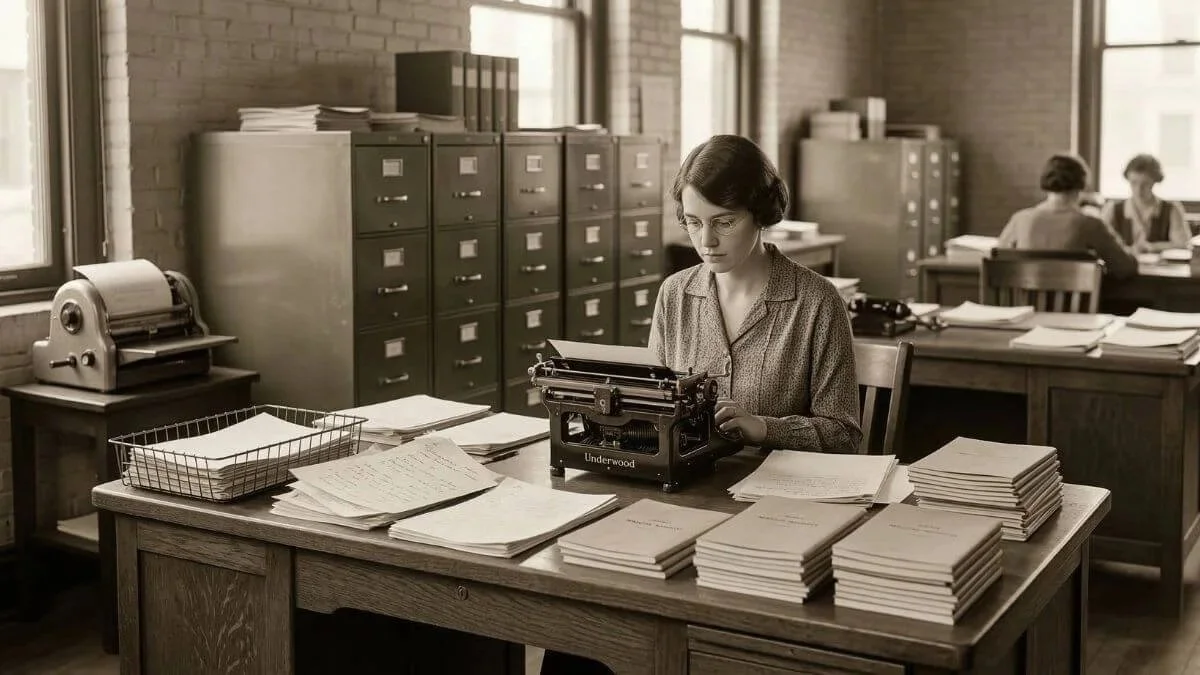
The Invention of the Employee Manual
We think of the employee handbook as a tool for clarity. In reality, it was the first piece of administrative scaffolding designed to protect the system from the people within it.
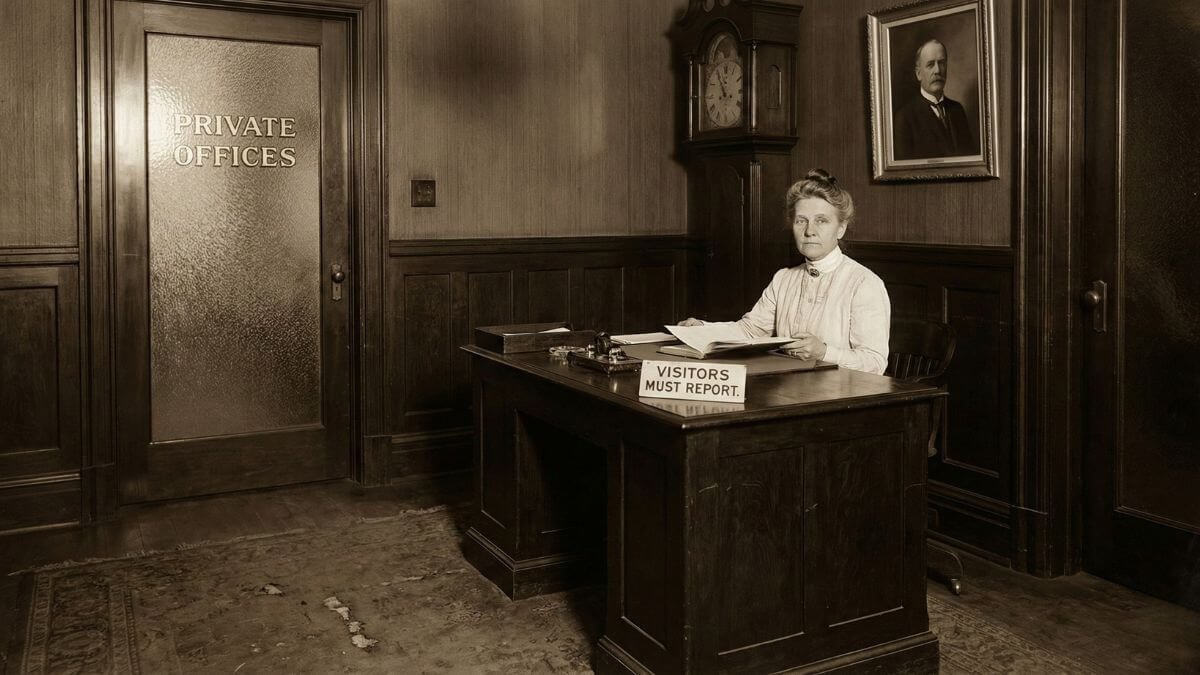
The Receptionist and the Performance of Protection
In the 1890s, the receptionist wasn't a greeter; they were a human filter. Discover how this legacy of "protective support" is currently creating a development trap for your team.