
The Receptionist and the Performance of Protection
When controlling access to the boss became a full-time job
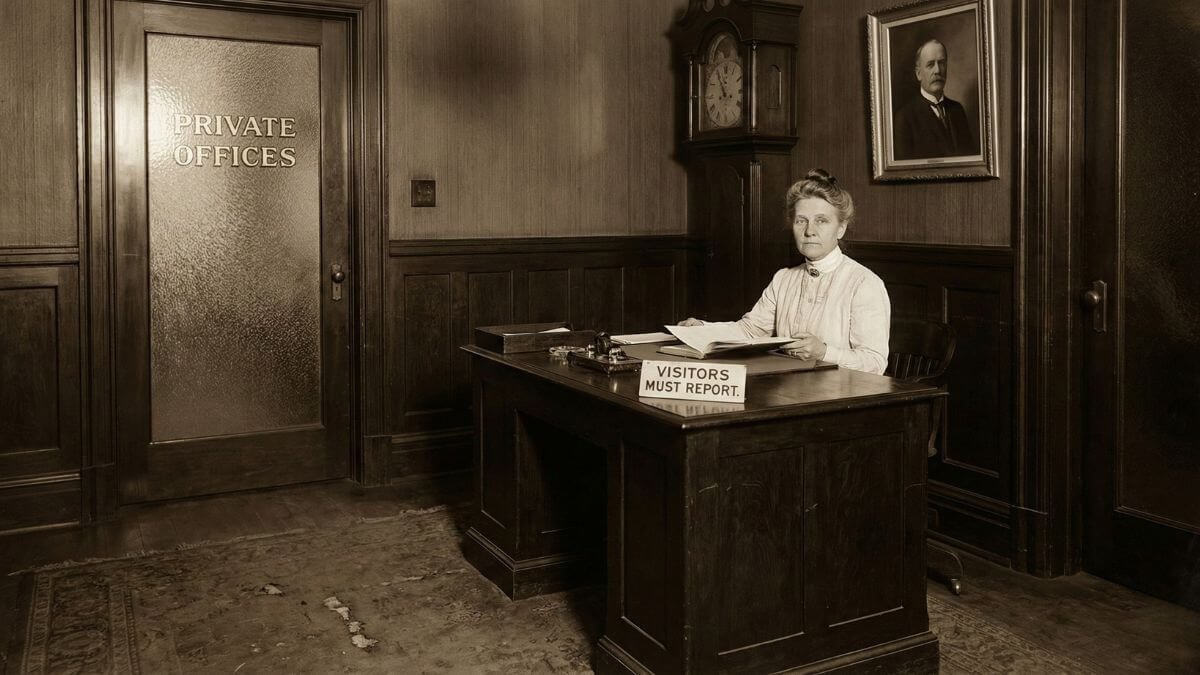
In the 1890s, American businesses grew too large for executives to answer their own doors. A railroad president could not run a company if every salesman, job seeker, and angry customer could walk straight into the office. The open door that worked for twenty people collapsed at two thousand.
So companies built a front door.
They needed a human filter. Someone to sit between the outside world and the inner sanctum of decision-making. The solution was the receptionist. Not a greeter. A gatekeeper whose job was to decide who deserved access and who did not.
The Job: The Receptionist
The receptionist was not hired to be friendly. They were hired to make judgments.
When someone arrived and stated their business, the receptionist assessed significance. Is this person a major client or a distraction. Is this urgent or merely loud. Does this warrant interrupting the executive, or can it be redirected into a hallway of polite delays.
“Mr. Harrison is unavailable” was not a scheduling update. It was a verdict.
And the verdict mattered, because the receptionist held enormous informal power. They controlled the gate. Which meant they controlled which problems reached the people with authority. They absorbed complaints. They slowed down opportunists. They shielded executives from constant demand. Their value was measured by how many interruptions they prevented.
This kind of support was not nurturing. It was protective. It required fast pattern recognition and emotional steadiness under pressure. Smile, listen, decide, block.
The Modern Correlation
Most managers do not have receptionists now. Many managers became them.
In Leadership Cartography™, this often shows up in the Lead with Support™ pathway. You filter requests from senior leadership before they hit your team. You intercept complaints from other departments. You take the heat in meetings so your people can stay focused. You pride yourself on being the buffer. The shock absorber. The person who can absorb tension without flinching.
From the outside, it looks like service. From the inside, it can feel like responsibility.
But the 1890s truth is still present. The receptionist was not there to develop anyone. They were there to prevent access.
Every time you handle a conflict for a team member, you perform the same gatekeeping function. You protect them from the very experiences that teach them how to hold a boundary, manage a stakeholder, or push back on an unreasonable request. The development issue is not usually a lack of coaching.
It is that you are so effective as the receptionist that no one learns how to work the door themselves.
The Hidden Cost
You believe your job is to create conditions where your team can do their best work. That belief is not wrong.
But protection can quietly turn into dependency.
You become the only one who knows how to navigate leadership moods. The only one who can translate vague requests into usable work. The only one who can say “no” without fallout. Your team stays productive, but they stay reliant. They do not build the muscle because you keep lifting the weight.
You have not just supported them. You have made yourself structurally necessary.
And that is the trap baked into the receptionist role. It works. It reduces friction. It keeps the executive uninterrupted. It keeps the system moving.
It also keeps everyone else outside the room.
The Question
If you spend your day filtering every tension before it reaches your team, are you supporting their development…or are you acting as the receptionist who has made themselves permanently necessary?

The Terrain Has Not Disappeared
The receptionist did not vanish. The role evolved.
Today, the gate is not a mahogany desk in a 1890s office.
It is the manager who absorbs tension before it reaches the team.
If protection is your default pattern, it may feel like leadership. It may also be shaping the developmental ceiling of the people behind you.
The question is not whether you support your team.
The question is how.
If this pattern feels familiar, explore the Lead with Support™ Pathway and see how protection shows up in your leadership terrain.
Or begin with the broader framework of Leadership Cartography™, where we map inherited workplace patterns and surface what they are actually building inside modern systems.
If you are not sure which pattern is running your week, take the Leadership Style Quiz.
In under two minutes, you will see which leadership pathway is driving your default responses and what it may be costing you.