


I Keep Giving Feedback. Nothing Changes.
Feedback misses when the person can't tell what to actually do with it.
Most feedback misses for the same reason. The person can't tell what to do with it.
When the same feedback bounces off twice, it's easy to assume you were too soft, or that they got defensive. Usually it's simpler. "Be more proactive" is a judgment, not something they can see in their own week. Without a clear standard behind it, even honest feedback comes out sounding like your personal opinion.
This map shows which part of your feedback is missing: a clear standard, a specific example, real stakes, or a point to follow up. You'll leave knowing what to put back into it.
If you keep giving the same feedback and watching nothing change, you're in the right place. This page helps you see why the message isn't landing, and what it's missing.
Find immediate clarity
I want to understand the pattern

Start with your map.
When feedback keeps missing, the issue is rarely just the words you chose. It often reflects a deeper leadership pattern: what you notice first, what you assume is obvious, and what you default to under pressure. The Source Assessment helps you identify that pattern so you can understand why this issue keeps repeating and what kind of support will actually help.
Ten minutes. Free. Your result arrives by email. Take the Source Assessment
Is this your terrain?
If two or more of these feel familiar, this is your terrain.
- You give the same feedback more than once and nothing changes.
- You soften the message so much the point gets lost.
- You put off the conversation until the small thing has grown.
- You end up redoing the work instead of addressing it.
- You can feel that something's off but can't point to what.
- Your feedback gets a nod, then the same thing happens again.
- You reach for traits like "be more proactive" because the specifics are hard to pin down.
- You hesitate to be direct because you don't want to damage the relationship.
If this is your terrain, you're already putting in the effort. The framework below shows what your feedback is missing, and what to put back into it.
The Feedback Governance Map: How feedback becomes usable
When the same feedback keeps missing, one of these four is usually missing from it.
Usable feedback has all four. When one is missing, the message doesn't land.
- 01 — StandardWhat "good" looks like here, said out loud.
- 02 — SpecificsSomething specific they did that you both can see.
- 03 — StakesWhy it matters and what changes if it doesn't.
- 04 — Follow-upA point where you both look at it again.

"I need you to be more proactive."
- StandardOn this team, proactive means flagging a risk before it lands.
- SpecificsTwo deploys stalled this month waiting on your handoff.
- StakesWhen the handoff waits, the whole release slips to the team.
- Follow-upA look at the next two handoffs on Friday.
"Your last few projects haven't really hit the mark."
- StandardA finished project here includes the QA pass and sign-off.
- SpecificsThe last two shipped without QA, so bugs hit production.
- StakesProduction bugs cost the client's trust and a week of rework.
- Follow-upReviewing the QA step together on the next one.
The first version hands the person a verdict with nothing to do about it. The second hands them something specific to act on and a point to check it against.
Put the four to work with the tools, or see why the pattern keeps happening before you commit to a fix.
What this sounds like in practice
Pick the scenario closest to what you're navigating this week. You don't need all of them right now.
When you're tempted to soften it
You don't want to seem harsh, so the point gets buried
When you've been avoiding it
The issue's been there a while and you keep putting it off
When you reach for a trait
You feel the problem but describe it as who they are
Choose your route
There's no single right move here. It depends on what you need right now.
You Need a Way to Give Feedback That Lands
Use this route when you have a conversation coming up and want it to land.
This route gives you the tools to make feedback specific, fair, and easy to act on, even when the conversation is hard.
- A way to turn a vague concern into a specific example
- Language for opening the conversation without softening the point
- A simple way to set a follow-up so the feedback doesn't fade
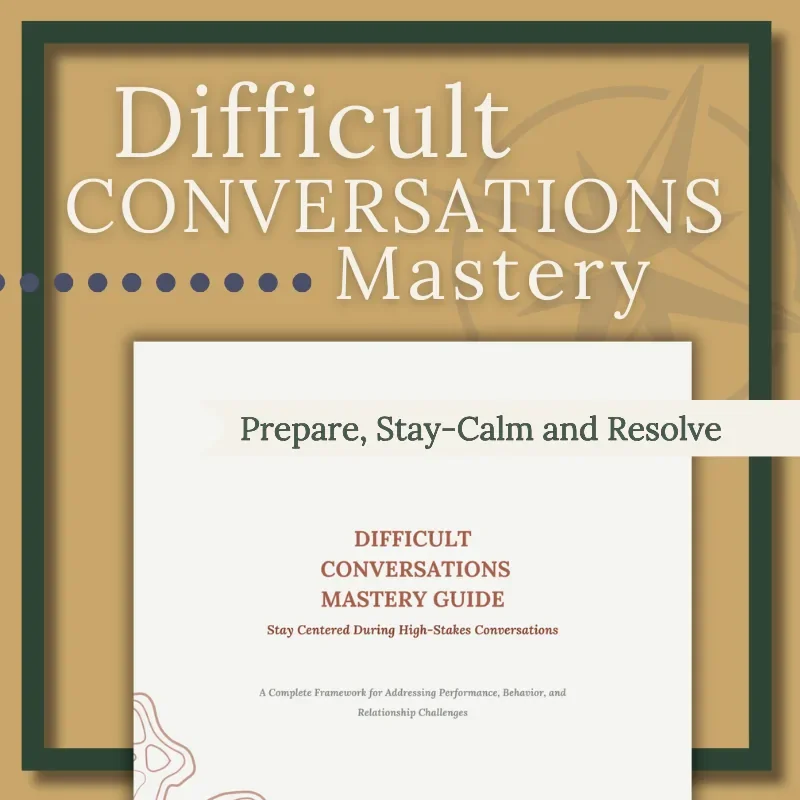
Difficult conversations don’t require a stronger personality. They require a steadier structure. This fillable guide gives you a calm, repeatable framework to prepare, open the conversation clearly, address the real issue without escalation, and close with concrete next steps. Use it for performance issues, behavior concerns, or relationship breakdowns—especially when informal feedback hasn’t worked. You’ll also get language support for common reactions (defensiveness, shutdown, tears, anger) and a follow-up plan so the conversation actually leads to change.
What’s inside (7 bullets)
Prep worksheet (facts vs. assumptions, intent, desired outcome)
Opening + closing structure
SBI (Situation–Behavior–Impact) discussion guide
Curiosity questions to reduce defensiveness
Handling reactions prompts (defensiveness/anger/tears/shutdown)
24-hour recap email template
30–60 day follow-up plan
Format line
Instant download • Fillable + printable PDF • 18 pages
FAQ (3)
Is this a script? Not word-for-word—structure + adaptable language.
Will it work for performance and behavior? Yes—both, plus interpersonal tension.
Does it include follow-up? Yes—recap email + follow-up cadence.
You Want to Understand the Pattern Before Choosing Your Next Move
Use this route if you want to see why your feedback keeps missing before you pick a tool.
This route helps you see what's making your feedback miss, so you can fix the condition instead of repeating the same conversation week after week.
- See why honest feedback still misses, even when you're clear
- Understand why repeating it louder doesn't work
- See the pattern before you pick a tool

Why honest feedback still misses
Feedback doesn't land in a vacuum. Three conditions the system sets decide whether it can land at all.
When your feedback keeps missing, one of these three is usually missing around it.
No shared standard
When the organization never made "good" explicit for this role, you set the bar in the moment. Honest feedback then comes out sounding like your personal taste, because there's no shared standard behind it.
What the system rewards
Most systems reward speed and smooth relationships. That makes hard feedback expensive to give, so it gets softened or put off. You're reading the incentive correctly. Raising it has a real cost here.
Standing and history
Without a clear process, feedback travels through the relationship. The same message lands differently depending on your history with the person, how new they are, and how much standing you carry with them.
Once you can see which of these is missing, the fix gets concrete. Some of it is yours to set. Some of it is the culture you're working inside.
Seeing which one is missing tells you what to put in place before the next conversation.
When this terrain keeps repeating
If this keeps showing up no matter who you're giving feedback to, the issue runs deeper than any single conversation. Your leadership Pathway shapes what you reach for under pressure, what you notice, and what you tend to miss when feedback is hard to give.
You'll get your Pathway orientation and next steps there.
When your feedback misses, the signal underneath.
| When they nod and nothing changes | When they get defensive | When you keep repeating yourself |
|---|---|---|
| They agreed without knowing what to change. The feedback had no specifics to act on. | They heard a judgment about who they are instead of a note about what they did. | The standard was never made explicit, so it lands as your preference instead of a shared bar. |
| What closes it: one concrete example and a clear picture of what good looks like. | What closes it: pointing to the specific behavior and when it happened. | What closes it: stating the standard first, then the gap against it. |
When the same feedback keeps missing, there's usually a missing condition underneath it. These paths help you see what's actually happening, hear how it plays out in real systems, and understand why the pattern exists at all. Start where your curiosity pulls you.

Read The Manager's Compass to diagnose the feedback pattern.
These frameworks help you identify which terrain friction is present and respond to the signals you're receiving through structured Terrain Surveys.
This is where you go when you want clarity before choosing a response.

Read The Manager’s Mind to hear how these patterns respond in real leadership moments.
Each post traces a lived situation so you can recognize yourself in the signal, not just understand it intellectually.
This is where the framework meets reality.



Read The History of Work to understand how these dynamics formed and why they persist. This lens connects modern system responses to friction to older systems of authority, professionalism, and control.
This is where personal frustration turns into systemic understanding.


Toolkits
These toolkits aren't meant to be used all at once. Each one helps you respond to a specific feedback signal once you understand what the system is actually reacting to.
Start with the friction that made feedback hard to use in the first place.
This tool helps you identify which signal is active and choose a response without over-correcting or getting defensive.
Use this to create the structure where expectations, evidence, and priorities can actually be named.
This toolkit helps you reset the frame so performance conversations clarify direction instead of amplifying anxiety.
Difficult conversations don’t require a stronger personality. They require a steadier structure. This fillable guide gives you a calm, repeatable framework to prepare, open the conversation clearly, address the real issue without escalation, and close with concrete next steps. Use it for performance issues, behavior concerns, or relationship breakdowns—especially when informal feedback hasn’t worked. You’ll also get language support for common reactions (defensiveness, shutdown, tears, anger) and a follow-up plan so the conversation actually leads to change.
What’s inside (7 bullets)
Prep worksheet (facts vs. assumptions, intent, desired outcome)
Opening + closing structure
SBI (Situation–Behavior–Impact) discussion guide
Curiosity questions to reduce defensiveness
Handling reactions prompts (defensiveness/anger/tears/shutdown)
24-hour recap email template
30–60 day follow-up plan
Format line
Instant download • Fillable + printable PDF • 18 pages
FAQ (3)
Is this a script? Not word-for-word—structure + adaptable language.
Will it work for performance and behavior? Yes—both, plus interpersonal tension.
Does it include follow-up? Yes—recap email + follow-up cadence.
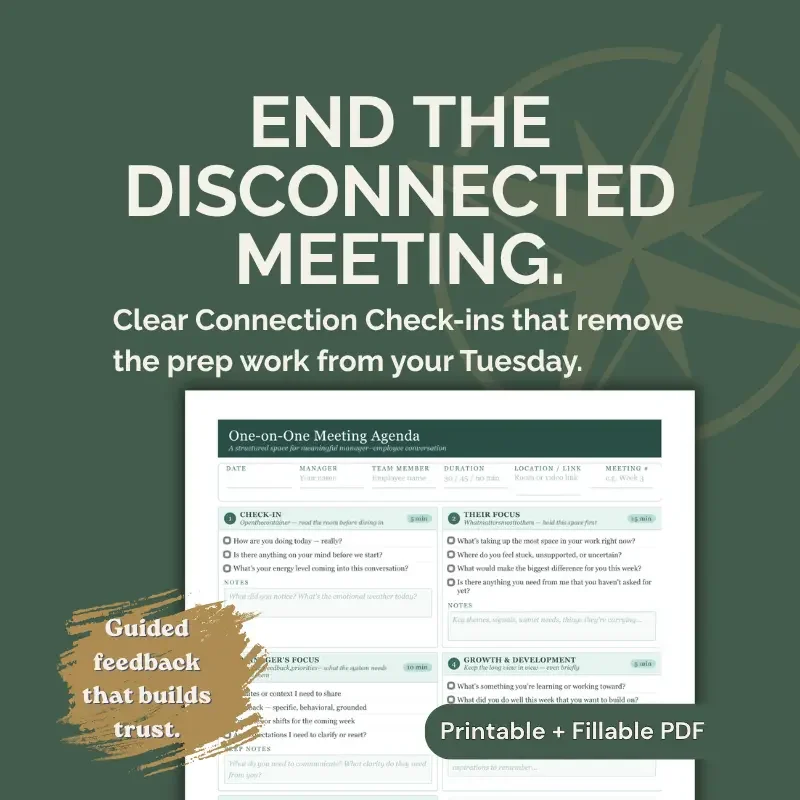
A printable, fillable 1:1 agenda that moves your one-on-ones beyond “updates-only” into progress, coaching, and clear follow-through.
If your one-on-ones keep stalling at surface-level updates, you’re not failing as a manager—your meeting structure is. The One-on-One Meeting Agenda is a printable, fillable 1:1 template for managers who want a clear format that shifts conversations toward progress, coaching, and meaningful development.
Built for weekly or biweekly check-ins, this agenda creates a repeatable rhythm: employees come prepared, priorities stay visible, feedback doesn’t get lost, and follow-ups don’t disappear after the call. Use it to move out of “vibes and updates” mode and into a steadier system of accountability and trust.
What this tool helps you do
Turn unproductive updates into growth-focused conversations
Add structure so employees come prepared
Keep discussions aligned with goals, feedback, and priorities
Create clearer accountability with consistent follow-through
Build a reliable 1:1 rhythm that strengthens trust and performance
What’s inside
One-on-One Meeting Agenda (focus areas + guided questions)
Sections for feedback, development, priorities, and follow-up
Printable + fillable PDF
Best for
Managers whose 1:1s feel repetitive or unfocused, new managers who need a steady meeting structure, coaching conversations that need more depth, and weekly/biweekly check-ins.
Result: clearer conversations, better follow-through, and one-on-ones that actually move work and growth forward.
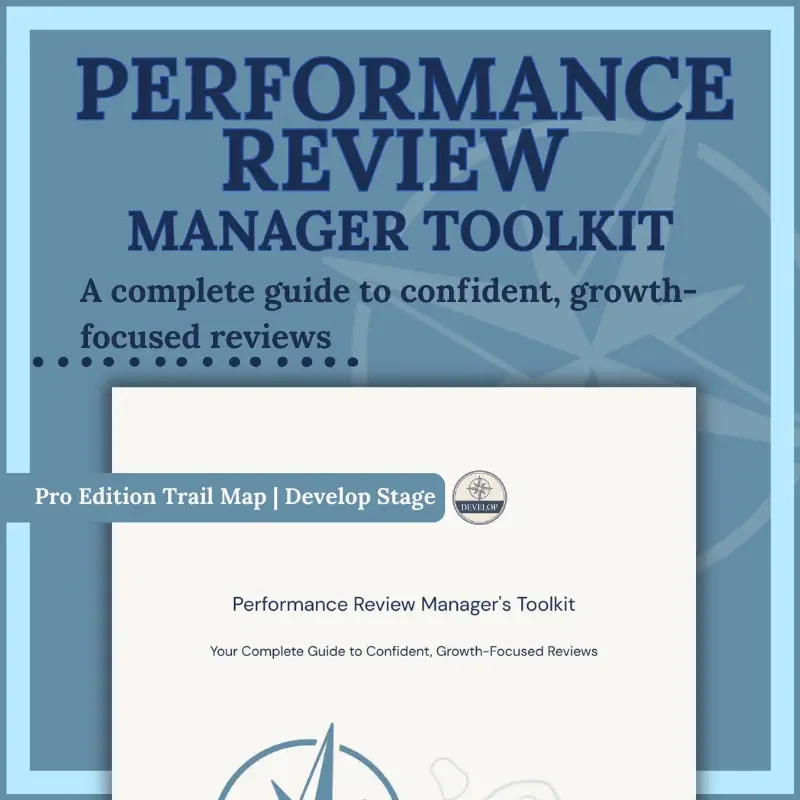
Turn performance reviews from stressful obligations into steady, growth-focused conversations.
This complete toolkit gives you:
The 3 Landmarks Framework to orient any review
A Pre-Review Checklist and employee prep email
A 60-Minute Review Structure with scripts and questions
The Clear Feedback Map™ for constructive conversations
Troubleshooting guidance for common challenges
Follow-up templates and a development planning worksheet
Designed for new managers and emerging leaders, this toolkit helps you Discover steady practices so reviews become a map for growth, not just a judgment.
Fillable, printable pages to use digitally or print out, use either way.
Related terrains you may be navigating
Feedback patterns often reveal deeper system imbalances. If clarity is missing here, one or more neighboring terrains may be complicating the signal.
Delegation Block Map
When feedback about standards isn't clear, delegation often stalls or requires constant correction.
Overwhelm Type Map
When the system is red-lining, critical feedback is often ignored or perceived as a personal threat.
Team Dynamics Map
When peer accountability is low, the burden of feedback falls solely on the manager.
Leading from the Middle
When vertical alignment is broken, feedback from above feels contradictory to the reality on the ground.
Feedback Pattern Map
Before you choose a next move, here are four questions managers tend to have in this terrain.
Why doesn't my feedback change anything, even when I'm clear?
Usually the feedback points at a trait or a feeling instead of a specific thing the person did. Without a concrete example and a shared standard, there's nothing for them to act on.
Is the problem my delivery or their attitude?
Usually it's the conditions around the feedback. When the standard for the work was never made explicit, even careful feedback comes out sounding like your opinion, and the person has nothing concrete to act on.
Should I soften feedback to protect the relationship?
Softening it usually buries the point, and the person can't tell what to change. Specific feedback tied to a clear standard protects the relationship better than a vague version, because it stays about the work.
What does this page help me do differently?
It helps you see which part of your feedback is missing, whether that's a clear standard, a specific example, real stakes, or a follow-up, so the next conversation gives the person something to act on.

Performance feedback often lands as a verdict on the person instead of the work. Here is why that happens, and the structure that keeps a review on the work.