


When Presence Disappears, Visibility Shouldn’t Go With It
You’re checking in more.
But the signal is still missing.
The shared room is gone. What remains is a legacy industrial rut: the belief that if you can't "see" the work, you have to pulse the team constantly to stay oriented. You leave conversations unsure if things landed, so you stay closer to everything just to feel safe.
I notice the friction starts with the "check-in." You fear that without proximity, the culture is eroding and alignment is assumed rather than real. You find yourself managing by surveillance—constant pings and meetings—because the map lacks legibility.
Remote leadership runs on signals you can’t see.
When you lose ambient signals, you lose the ability to see confusion before it compounds. Surveillance is not support; it is an attempt to use "eyes on" to replace a lack of structural precision. You don't need more meetings; you need a more legible map.
This map provides the Coordination Protocol you need to make work-in-progress visible across time zones. Stop the guesswork and lead through steady signals that keep the team coherent without the noise of constant interruptions.
I need the coordination gear.
I want to see the Terrain

Start with your map.
When remote leadership feels harder than it should, the issue is rarely just distance. It often reflects a deeper leadership pattern: how you create connection, how you track work, how you read silence, and what you default to when visibility drops.
The Source Assessment helps you identify that pattern so you can understand what remote work is amplifying in your leadership and what kind of support will help.
Ten minutes. Free. Your result arrives by email.
Is this your terrain?
Remote leadership friction surfaces when:
- Agreements feel solid in the meeting but unravel 24 hours later.
- Work progresses, but the coordination between people feels fragile.
- You can't tell what people truly understand or own.
- Silence becomes the default response in digital channels.
- Small misalignments surface late when correction is expensive.
This terrain is not defined by physical distance. It is defined by missing feedback from the system. If this is your terrain, you don't need more effort. You need a clearer map. Start with the framework that makes remote leadership visibility navigable.
The Remote Leadership Map: Where Signal Breaks Down
Remote leadership friction shows up when one or more coordination functions lose visibility. These four signals help you locate where understanding is breaking down — not what to fix yet.
Direction Drift
Clarity about outcomes weakens.
- Priorities appear aligned, but people act toward different definitions of success.
- Decisions feel agreed upon without shared criteria for "done."
Governance Blur
Decision authority and boundaries are unclear.
- It's not obvious who decides, what is final, or what constraints apply.
- Work continues, but decisions remain provisional in practice.
Sensemaking Lag
Understanding forms at different speeds.
- Information arrives unevenly across channels and time zones.
- People interpret signals independently, leading to parallel but misaligned conclusions.
Coordination Fragility
Work depends on individuals instead of structure.
- Hand-offs are informal. Progress relies on memory, follow-up, and manual tracking.
- When attention shifts, momentum drops.
Team meeting ends. Everyone says "sounds good." Three days later, three people are working on different interpretations of the same goal.
- Direction: "Before we close: what does 'done' look like for this? Let's confirm the success criteria in writing."
- Governance: "Who owns the final decision on scope? Let's document that so we're not second-guessing later."
- Sensemaking: "I'm hearing different interpretations. Let's pause and confirm: are we aligned on [specific point]?"
- Coordination: "Let's map the handoffs. Who needs what from whom, and by when? Put it in the tracker, not Slack."
You ask for an update. Team member says "it's going fine." Two weeks later, the project is off track.
- Direction: "When you say 'fine,' what metric are you using? Let's align on what 'on track' means."
- Governance: "If you hit a blocker, what's in your authority to decide vs. escalate? Let's clarify that now."
- Sensemaking: "What signals would tell you this is veering off course? Let's establish early warning indicators."
- Coordination: "Who else needs to know about progress? Let's create a regular update cadence, not just ad-hoc check-ins."
The first approach assumes shared understanding exists. The second creates explicit structure for visibility when physical proximity can't do it passively.
What this sounds like in practice
When agreements unravel after meetings
Direction clarity disappears once people leave the room
When you can't tell what people actually understand
Silence doesn't mean agreement or confusion
When coordination depends on your memory
Work stalls when you're not actively managing it
The pattern: Make understanding explicit, test for alignment actively, move coordination from memory to structure.
Choose your route
There is no single right move here. It depends on what you need first.
Use this route when remote work feels quiet but unstable.
This tool gives you a repeatable structure for surfacing signal in distributed teams so decisions, concerns, and ownership don't stay hidden.
- Create visible moments for real updates, not status theater
- Surface misalignment before it hardens
- Restore shared understanding without adding meetings

Use this route when you want to understand what's slipping beneath the surface.
This path helps you see how distance alters feedback, visibility, and authority so you can intervene precisely instead of compensating broadly.
You'll map:
- Where signal is being lost
- How meaning is fragmenting
- Which adjustment restores coordination first
What is actually happening
Remote leadership friction appears when the system loses its feedback loops. In a shared office, understanding is continuously confirmed and corrected through ambient signals. In distributed work, those signals do not travel automatically.
Coordination now relies on explicit visibility. Most of the time, three predictable breakdowns are at play.
Signal Loss
Remote work removes the small cues that reveal confusion, hesitation, and drift. You do not see misunderstanding forming. You do not hear correction happening in motion. By the time a mismatch becomes visible, it is already embedded in the work.
Context Fragmentation
Information is unevenly distributed across roles, time zones, and channels. People act from partial context and make different meaning from the same message. Alignment becomes a set of parallel interpretations rather than one shared understanding.
Decision and Ownership Blur
Decisions lose visibility and ownership loses edges. Work continues, but it is not clear what is final, who holds the next step, or what "done" means. Follow-up becomes manual. Coordination depends on you instead of the system.
Once you identify which visibility breakdown is active, your next move becomes clear. But first, you need to recognize the signal accurately.
When you're navigating remote leadership, your internal story is often reasonable. It's just incomplete. Here's how to read what the system is actually telling you.
When this terrain keeps repeating
If this keeps showing up across different situations, you might not need another tactic. You might need orientation. Your leadership Pathway shapes what you notice, what you prioritize, and what you misread under pressure.
You will get your Pathway orientation and next steps there.
Your interpretation. The likely signal.
| You Think: | The System Signal May Be: |
|---|---|
| I need to check in more often. People are drifting. | Signal is not visible. Decisions, owners, and expectations are not shared in one place. |
| No one is speaking up, so we must be aligned. | Feedback loops are missing. Silence is not providing confirmation of understanding. |
| I keep repeating myself, and it still doesn't land. | Context is fragmented. People are receiving different inputs and building different interpretations. |
| People are waiting on me for everything. | Decision authority is unclear. Governance is blurred, so work routes back to you. |
| We do not notice problems until the deadline. | Sensemaking is delayed. Misalignment forms early and becomes visible late. |
When this pattern repeats, treat it as a structural signal.

Read The Manager’s Compass to interpret the exact coordination signal you are seeing.
These frameworks help you identify which leadership function is losing visibility and how distance is shaping the behavior of the system.
This is where you go when you want orientation before deciding what to adjust.
Read The Manager’s Mind to hear how remote leadership signals surface in real situations.
Each post traces a lived moment of distributed work so you can recognize the pattern as it unfolds, not just name it after the fact.
This is where the framework meets reality.

Read The History of Work to understand why distance changes how authority and coordination function.
These essays trace how modern management evolved around visibility, standardization, and control. When work becomes distributed, those mechanisms weaken. New ones take their place, often without being named.
This is where the pattern gets historical context.


Toolkits
These tools are not meant to be used all at once. Each one restores a different signal that tends to disappear when leadership is distributed.
Start with the breakdown you are noticing most clearly right now. That signal tells you which coordination function needs attention first.
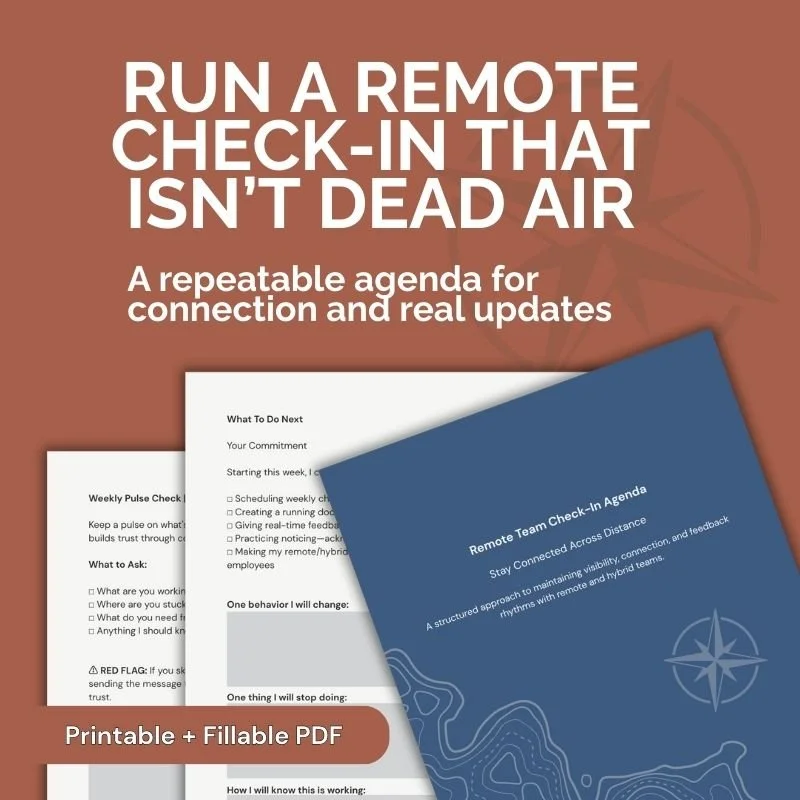
Remote Team Check-In
When teams are remote, alignment can sound present while understanding quietly drifts. This agenda creates a shared signal space. It makes progress visible, surfaces blockers early, and restores real coordination without adding more meetings.
Use this when silence, polite updates, or vague agreement are masking misalignment.
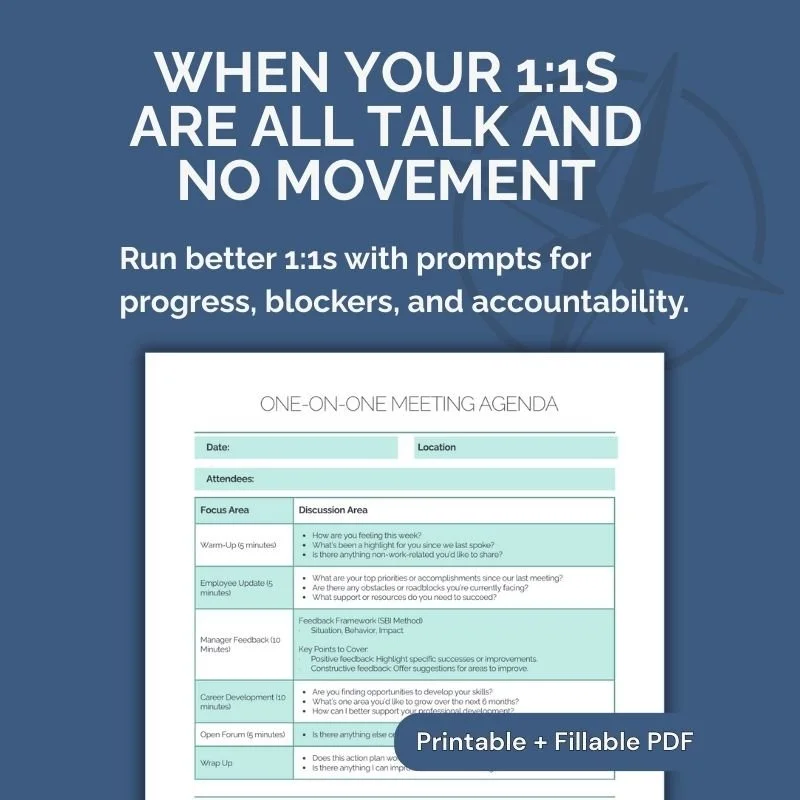
One on One Meeting Agenda
Remote work often turns 1:1s into conversation without movement. This agenda reintroduces structure around decisions, ownership, and follow-through so individual conversations actually advance shared work.
Use this when 1:1s feel supportive but nothing seems to move afterward.
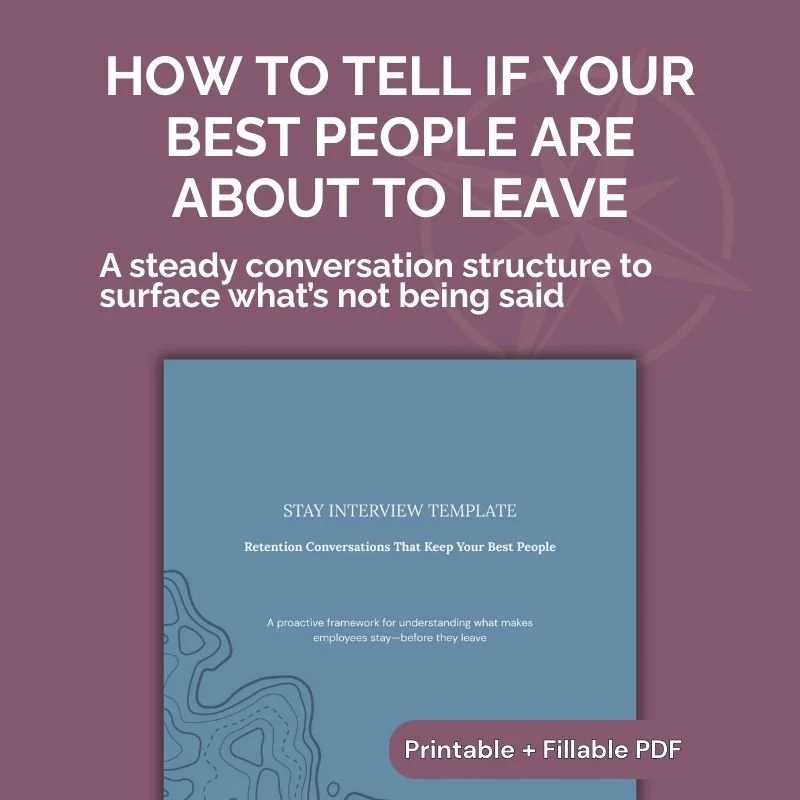
Stay Interview Template
Distance makes disengagement hard to detect until it is too late. This template creates a steady, non-performative way to surface what is not being said so leaders can respond to relational drift before it turns into exit risk.
Use this when people seem "fine," but commitment feels thin.
The Tools
This terrain rarely travels alone
Remote leadership friction often overlaps with other coordination terrains. When signal weakens, multiple patterns can activate at the same time. If you are here, one or more of these neighboring terrains may be present as well.
| Neighboring Terrain | When it may be active |
|---|---|
| Feedback Pattern Map | When feedback loses clarity or safety and understanding does not land evenly across distance. |
| Former Peer Transition Map | When authority is still settling and leadership signals are read inconsistently. |
| Time Management Pattern Map | When asynchronous work fragments attention and erodes shared timing. |
| Managing Up Map | When priorities, constraints, and decision authority are unclear across levels. |
You do not need to solve all of these at once. Noticing which one is active is often enough to change how you lead.
Remote Leadership Map
Before you choose a next move, here are four clarifying answers managers tend to need in this terrain.
Why does remote leadership feel harder even when the team is capable?
Because remote work removes ambient signals. When visibility, context, and informal alignment disappear, the system relies entirely on explicit structures to coordinate work.
Is remote leadership mainly a communication problem?
It is a systems visibility problem. When expectations, decision paths, and ownership are not structurally encoded, communication volume increases but clarity does not.
Why do small issues escalate faster on remote teams?
Because weak signals go unnoticed. Without shared reference points, uncertainty accumulates until it surfaces as urgency, rework, or conflict.
Should I increase check-ins or documentation to fix this?
Not automatically. This map helps you determine which signals need structure and which rhythms need adjustment, so effort restores alignment instead of creating noise.
What does this page help me do differently?
It helps you make the invisible coordination work of leadership explicit, so trust, progress, and accountability can function without constant oversight.

When your project stalls and every conversation stays vague, you don't need better communication—you need better questions. The 3×3 Clarity Map gives you nine specific questions to cut through noise and restore execution in ten minutes.