
The Switchboard and the Illusion of Connection
When every conversation required permission from a central operator
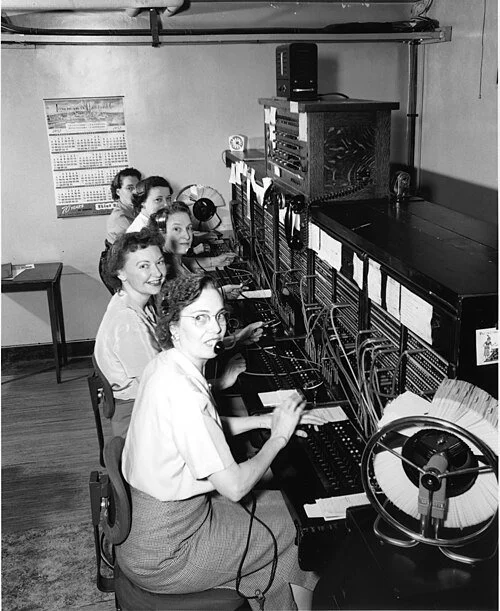
Seattle Municipal Archives, CC BY 2.0 <https://creativecommons.org/licenses/by/2.0>, via Wikimedia Commons
In 1878, the first telephone exchange opened in New Haven, Connecticut with 21 subscribers. If you wanted to call someone, you picked up your telephone and an operator answered. You told them who you wanted to reach. The operator physically connected your line to the other person's line by plugging a cable into the correct jack on a massive board. Then you could speak. When you finished, you told the operator to disconnect you. Every conversation required the operator's labor. Every connection was visible to someone else. The telephone didn't create direct communication. It created mediated communication, where a third party controlled, monitored, and enabled every exchange.
The Job: The Switchboard Operator
The Switchboard Operator sat at a massive board with hundreds of jacks and cables. When a subscriber lifted their receiver, a light would illuminate on the board. The Operator plugged in, asked who they wanted to reach, checked if that line was available, and manually connected the two parties. If the line was busy, the Operator told them to wait. If the person wasn't home, the Operator took a message. The Operator heard the beginning of every conversation and often heard entire exchanges if they didn't disconnect properly or if they chose to listen.
The Switchboard Operator wasn't just a technical facilitator. They were the central node in the social network. They knew who called whom and how often. They knew which calls lasted five minutes and which lasted an hour. They knew when someone's line was busy all afternoon. They knew who asked for certain people and who never received calls at all. This information gave them social power. They could prioritize connections for people they favored and delay connections for people they didn't. They could share gossip about calling patterns. They could refuse to connect calls they deemed inappropriate.
The Switchboard Operator's role required managing hundreds of relationships simultaneously. They had to remember who was connected to whom, who was waiting, who had standing instructions about when to accept calls. They became the hub through which all relationships flowed. But this centralization came with a cost. No one could connect directly. Every relationship, every conversation, every attempt to collaborate required the Operator's permission and participation. The telephone created new communication possibilities, but it routed every single one through a bottleneck who could hear, judge, and control access.
The Modern Correlation
Today, most teams don't have switchboard operators. But if you lead with Together™ in the Leadership Cartography™ system and you're managing remote or distributed teams, you might have become one. You route information between team members. You facilitate introductions. You decide who needs to be on which calls. You create communication channels and determine access. You monitor who's talking to whom. You notice when someone isn't participating in team channels or hasn't responded in Slack. You position yourself as the connector, the hub, the person who keeps everyone linked.
The telephone switchboard was eventually replaced by direct-dial systems that let people connect without an operator. But many remote leadership structures still operate on switchboard logic. You're in every meeting. You're copied on every email thread. You're tagged in every Slack conversation. Your team doesn't collaborate. They wait for you to create the conditions for collaboration. They don't reach out to each other when they need something. They reach out to you and ask you to connect them. You've become the central node, and every relationship on your team flows through you.
If the switchboard operator controlled every connection because the technology required it, and your remote team routes every collaboration through you because that's how the system works, are you leading with Together™, or are you just the operator who never taught them how to direct-dial?
Related Reading:
The Sociological Department and the Surveillance of Care— Ford's inspectors entered workers' homes and heard everything about their private lives. Same systems issue as the switchboard: a central figure with access to private information who controlled outcomes based on what they heard.
Ford's Assembly Line: When Efficiency Meant You Never Saw the Finished Product — A different pathway (Precision™) but a strong structural echo: what happens when you route everything through a system that removes individual agency and understanding.
Identify Your Legacy: Are you a Together™ pathway leader who's become the mandatory hub for every team connection? Take the Leadership Style Quiz to see if your collaborative strengths have turned you into a 1880s switchboard operator that your team can't work without.

Sources:
Brooks, J. (1976). Telephone: The First Hundred Years. Harper & Row.