
The First Consultant and the Outsourcing of Thinking
When companies decided their own employees couldn't solve their problems
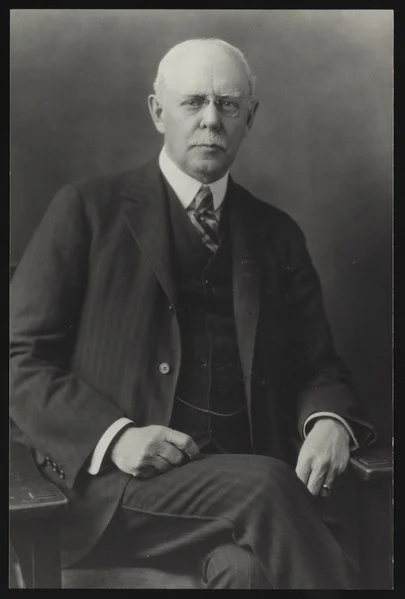
Science History Institute, CC BY-SA 3.0 <https://creativecommons.org/licenses/by-sa/3.0>, via Wikimedia Commons
In 1886, chemist Arthur D. Little founded the first management consulting firm in America. He didn't just sell expertise; he sold a bypass for internal friction.
Companies in the late 19th century had the same architecture of knowledge they have today: employees who understood the problems and leaders who didn't trust them to solve them. Little realized that recommendations from the inside are easily dismissed as biased, self-interested, or politically motivated. He offered something the internal staff could never possess: the authority of the outsider.
The first consultant wasn't hired for superior thinking. He was hired for the permission to say what everyone inside already knew but couldn't articulate without consequences.
The Architecture of the Outsider
The consultant arrived with credentials and a contract that granted total access. They interviewed, they observed, and they asked the same questions employees had been asking for years. Then, they wrote a report.
This report often contained the exact recommendations internal staff had already proposed and seen rejected. But when the consultant documented it, it became actionable. When the consultant said it, it became truth.
The consultant’s value was not their insight, but their lack of skin in the game. An employee suggesting a department reorganization is seen as playing politics. A consultant suggesting the same thing is seen as objective. The role required a specific kind of precision, but the real skill was translation: gathering intelligence from the people doing the work, repackaging it as external expertise, and selling it back to leadership as a revelation.
The Intellectual Laundering of the Modern Era
The consultant is the ultimate byproduct of low-trust environments. In 1886, Little realized he could charge a premium for "objectivity" simply because he didn't have to worry about the internal politics of the companies he served. He turned the lack of institutional trust into a business model. Today, the dynamic is unchanged: leadership ignores the signal from the ground and pays for the noise from the outside.
When you hire a consultant to validate an internal insight, you are participating in a cycle of intellectual laundering. You are taking the raw, accurate data of your own people and paying a third party to strip it of its "internal" label so it can be consumed by executives who view their own staff with suspicion.
If you are a leader whose precision is only valued when it is rebranded by a firm, you are not a strategist. You are a ghostwriter for your own replacement. You are providing the intelligence while the consultant provides the spine.
Organizations do not hire consultants because they lack capability. They hire them because they lack the courage to believe their own people. If your team's analysis requires a six-figure signature before it becomes "truth," the problem isn't your data. The problem is the terrain. You are operating in a system that would rather be wrong with an outsider than right with you.
If your team's analysis requires a consultant’s signature before it is taken seriously, you aren't just paying for advice. You are paying for a lack of internal courage.
Related Reading
The Stenographer and the Speed of Invisible Accuracy
The Darwinian Pivot: Why the Boss Got Wheels Before the Factory Did
Identify Your Terrain: Are you a Precision™ pathway leader whose accurate analysis gets ignored until consultants validate it? Take the Leadership Style Quiz to see if your precision work is trapped in a system that doesn't grant internal knowledge the authority to act.