


The History of Work
Every management theory
on this shelf was invented
to solve someone else's problem.
In someone else's century.
We are still using them. The org chart, the performance review, the chain of command — all of it designed for a world that no longer exists. The History of Work traces where these ideas came from, what problems they were actually built to solve, and why applying them today produces exactly the friction you keep running into.
The map was never drawn for you in the first place.
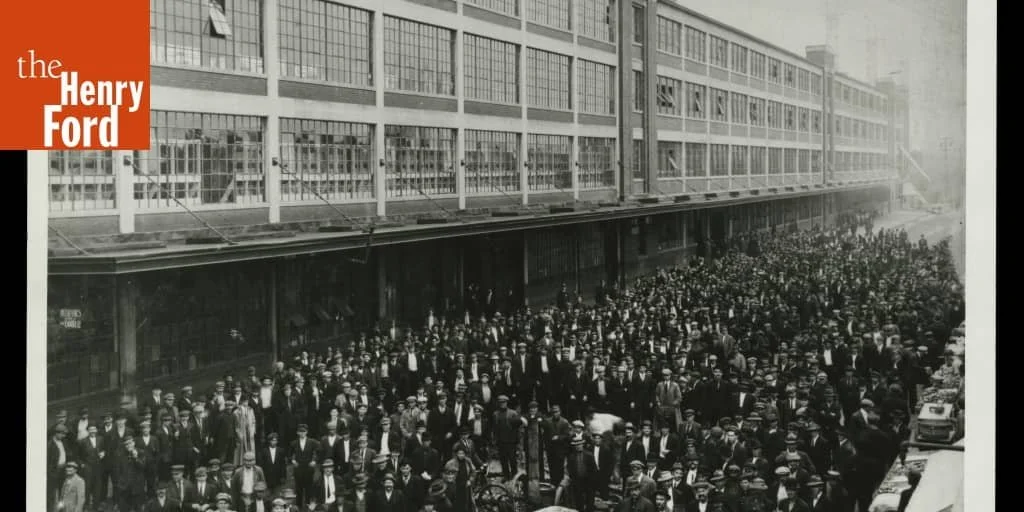
The $5 Day and the Price of Your Personal Life
In January 1914, Henry Ford announced he would pay his assembly line workers $5 a day. The fine print didn't make the headlines. Workers still earned $2.34 in wages. The additional $2.66 required passing inspection by Ford's newly created Sociological Department, which showed up at your home unannounced to evaluate your marriage, your kitchen, and whether your wife had the nerve to hold a job. If you're a Purpose™ pathway leader who wants work to mean something, you've inherited Ford's bargain in a form so subtle it looks like culture.
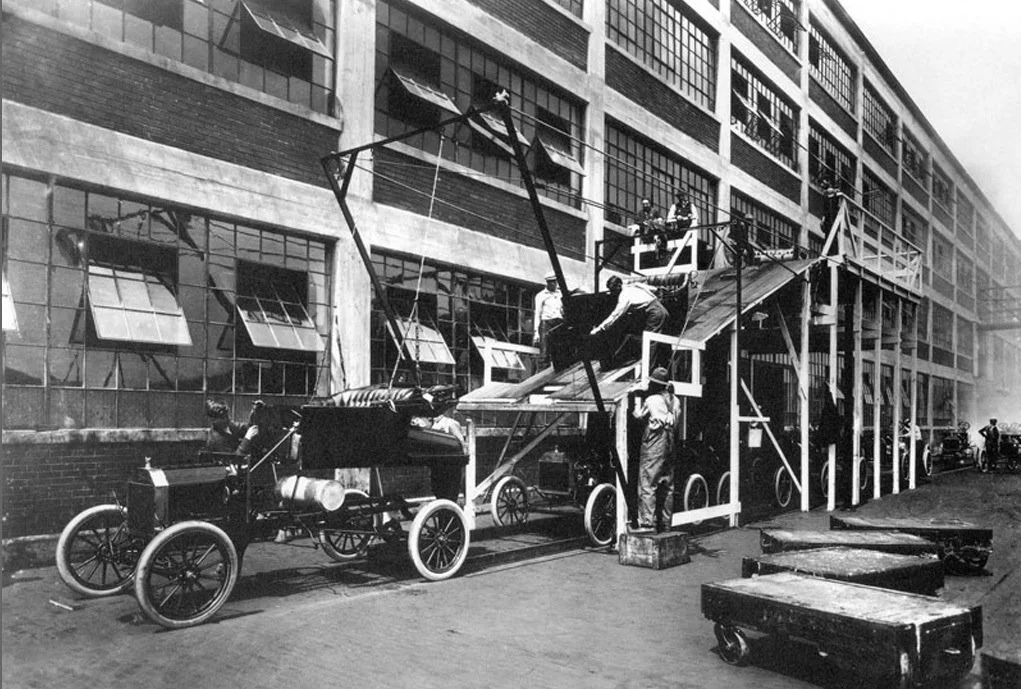
Ford's Assembly Line: When Efficiency Meant You Never Saw the Finished Product
In 1913, Henry Ford installed a moving assembly line at his Highland Park plant and cut Model T build time from 12 hours to 93 minutes. Every worker stayed in one spot. The work came to them. And in doing so, Ford built the first system where efficiency required that no single person understand the whole.

The Invention of the Employee Manual
We think of the employee handbook as a tool for clarity. In reality, it was the first piece of administrative scaffolding designed to protect the system from the people within it.
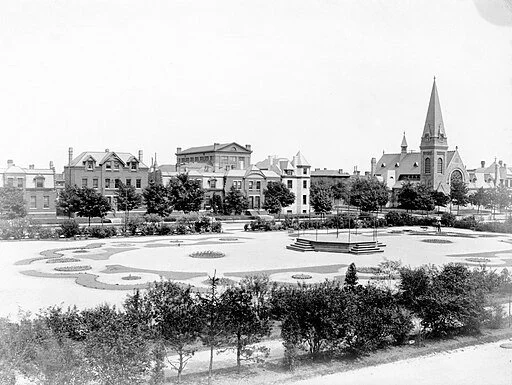
The Company Town and the Architecture of Total Provision
In 1880, George Pullman built an entire town for his workers. Decades later, Gilchrist, Oregon, was founded in 1938 and operated as a company town until 1991. In these places, the employer was also the landlord, the grocer, and the teacher.