
The Organization Man: The Soul in the Cubicle
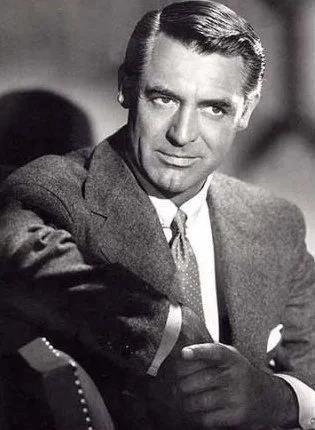
Cary Grant 1958. A Mens Fashion Icon of the times. farid_s_v., CC BY-SA 2.0 <https://creativecommons.org/licenses/by-sa/2.0>, via Wikimedia Commons
How the 1950s Social Ethic traded individual identity for corporate security.
In 1956, William H. Whyte published a warning that would define the mid-century office: the individual was being swallowed by the group. The post-war era demanded a new kind of worker who did not just show up for a paycheck but offered their entire personality as a sacrifice to the corporation. This was the birth of the Organization Man. This shift was a response to the massive growth of American industry. It required a level of coordination and predictability that the old rugged individualist could not provide. The system needed steadiness, but it achieved it by demanding total conformity.
The Organization Man lived in a world where the office was a moral community. He was expected to believe that the group was the source of all creativity and that his primary duty was to fit in. This was not just about wearing the same gray flannel suit. It was about the internal friction of suppressing one’s own instincts to maintain the harmony of the hierarchy. The system promised security and a lifetime pension, but the cost was the slow erosion of the human signal.
The Job Description: The Company Man
The Company Man was a middle manager whose primary output was coordination and compliance. His role was to be a frictionless part of a larger machine. He spent his day in meetings designed to build consensus, where the goal was rarely the best idea, but the idea everyone could agree on. He was the first to experience the performance theater of modern office life, where appearing busy and aligned was as important as the work itself.
The Company Man had to navigate the deep friction of the Social Ethic. He was tasked with managing a team while being told that the team should manage itself. He was responsible for results but forbidden from showing too much individual initiative. His value was measured by his loyalty and his ability to mirror the company’s values back to his superiors. He lived in a state of constant social monitoring. He ensured his home, his hobbies, and his opinions never drifted too far from the corporate center. He was a traveler who was given a map by the company and told that any deviation from the path was a failure of character.
Modern Correlation: Leadership Cartography™
We no longer wear the gray flannel suits, but the Organization Man still haunts our Slack channels and Zoom calls. The friction has shifted from physical conformity to digital performance. We are often more focused on the Together™ aspect of work than the actual outcomes. We mistake consensus for collaboration and alignment for clarity. We are still being asked to sacrifice our human steadiness for the sake of a corporate system that values the group over the person.
This is where Leadership Cartography™ and the Lead with Together™ pathway change the vibe. In the 1950s, Together meant disappearing into the crowd. Today, Lead Together™ means building a map where individual signals are used to steady the entire team. It is not about conformity. It is about shared clarity. When you lead this way, you stop demanding that people fit in. You start ensuring that everyone knows exactly where they are on the map and how they are contributing to the journey.
Are you building a team steady enough to navigate friction, or are you just managing a gray flannel vacuum of Groupthink?

Your Next Step
Identify Your Terrain—Are you leading with Purpose™, or is the Social Ethic causing you to drift along with the group? Find My Footing
Lower the Pressure—Stop waiting for recognition and start mapping your trajectory. I’ve chosen the Promotion Readiness Map for this story because it helps you move from "fitting in" to "standing out" through strategic clarity. It provides the relief of knowing exactly what your next move looks like. Grab the Map
Join the Map Drawer—Get monthly tactical kits delivered to your inbox, designed to help you lead with clarity and boundaries. Open the Map Drawer