Another Cup of Coffee Please…
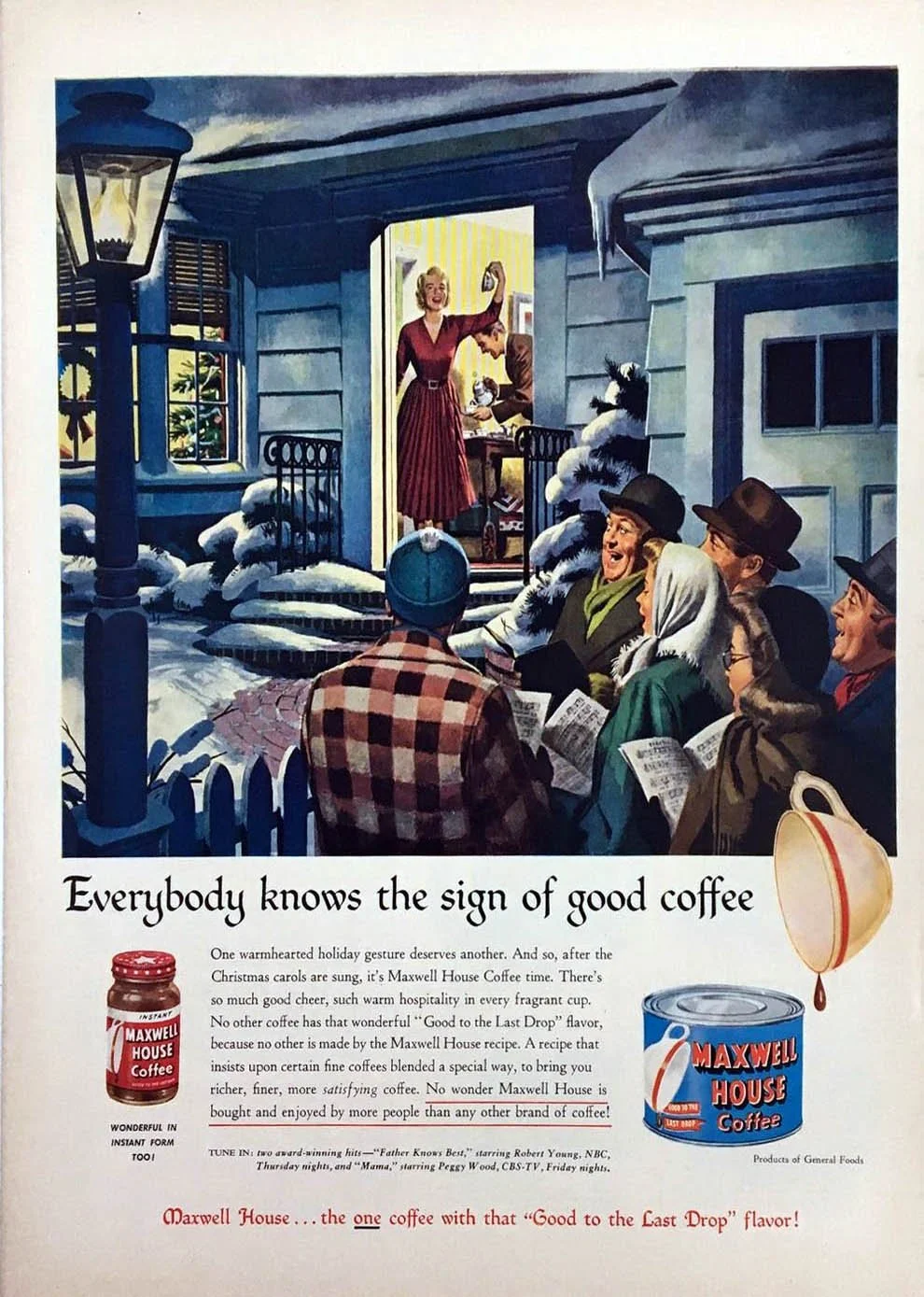
Ad for Coffee from Maxwell House, Public domain, via Wikimedia Commons
In 1952, the Pan-American Coffee Bureau noticed a problem. Americans were drinking coffee at home, but they weren't drinking enough of it at work. The Bureau launched a massive $2 million advertising campaign with a simple, catchy slogan: "Give yourself a Coffee-Stop—and get what coffee gives to you."
They didn't just sell beans. They sold the idea that a worker was a machine that required a specific type of fuel to keep the gears turning. Before this, stopping work for ten or fifteen minutes was often seen as shirking. After 1952, the coffee break became a cultural mandate and, eventually, a legal right in many labor contracts.
The Necessity of the Jolt
In the early 1950s, the American economy was shifting. Factories were humming, and the post-war boom required high-speed output. Management needed a way to keep workers at their stations longer without them burning out by 2:00 PM.
The coffee break wasn't born out of a desire for employee wellness. It was a productivity hack. If a company granted fifteen minutes of rest, they could demand higher intensity for the remaining seven hours and forty-five minutes. It was a calculated trade: a small amount of freedom for a significant increase in stamina.
From Errand Boy to Barista
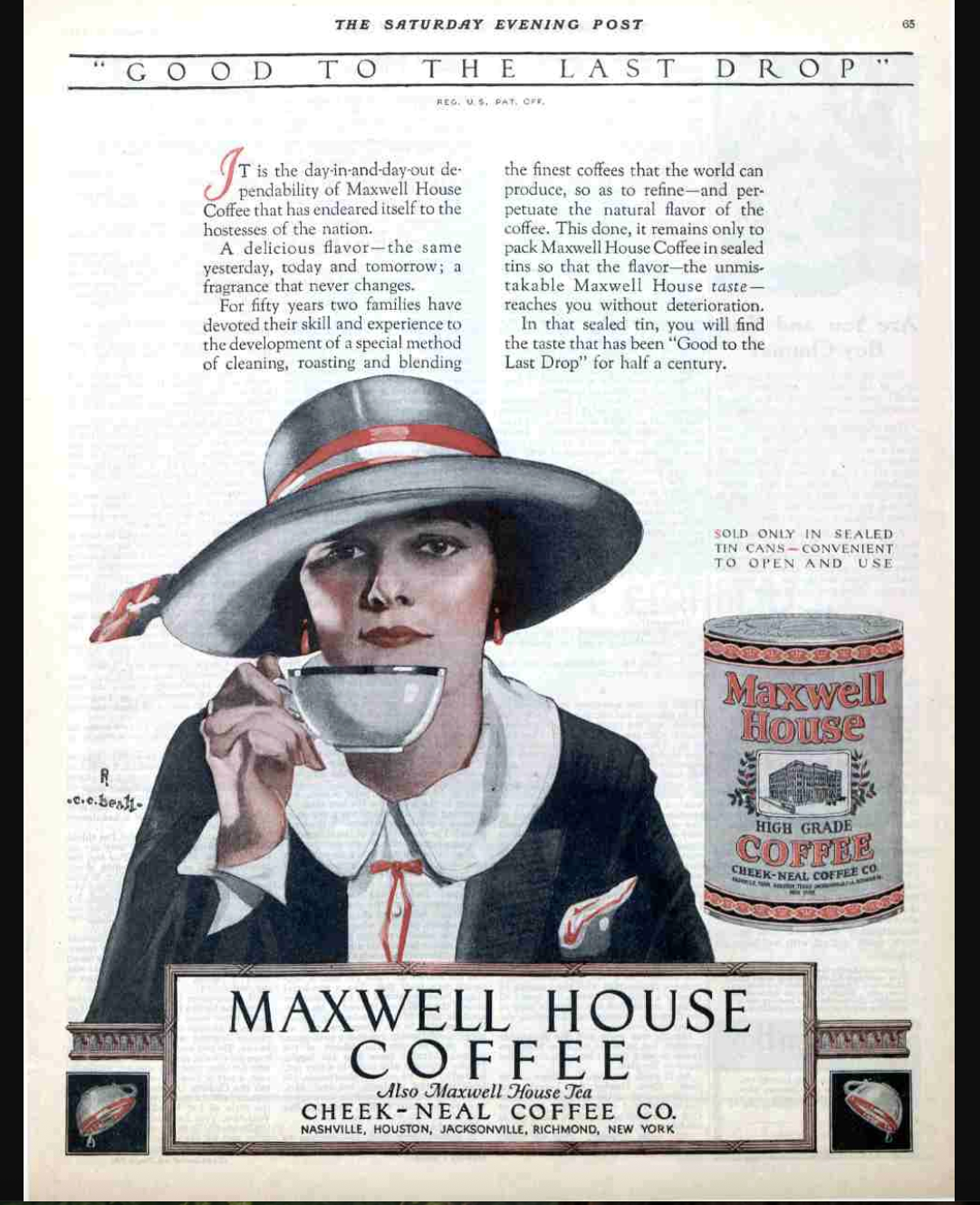
Image Credit: The Saturday Evening Post, Maxwell House Coffee
January 6, 1923
Before the formalized break, the workplace was chaotic. In many offices, you had the Messenger or Errand Boy. This was often a teenager whose sole job was to run between floors, delivering physical memos or fetching buckets of water and pails of coffee for senior clerks.
Work didn't stop for a break; the coffee came to you while you remained tethered to your desk or machine. You drank while you worked.
Once the 1952 campaign took hold, the role changed. The Breakroom Attendant appeared. This person managed the new, dedicated space where the Coffee-Stop happened. For the first time, the system acknowledged that we needed to physically move away from the task to remain effective. But even this was a form of control. By designating a break area, management could ensure workers weren't wandering off-site or socializing in ways they couldn't monitor.
The Modern Correlation: The Digital Tether
Today, we look at the 1950s coffee break as a quaint relic. We have high-end espresso machines in our office hubs and virtual coffee chats on Zoom. But the absurdity has only shifted shapes.
In 1952, the break was a way to recharge the battery for the physical assembly line. In 2026, we have Slack-Integrated Coffee Breaks and Wellness Minutes. We have altered the ritual to fit an environment where the work never actually stops. We take our breaks while scrolling through work notifications on our phones. The physical separation the Coffee Bureau fought for has vanished. We are now Support™ing a system that expects us to be productive while we rest.
In the language of Leadership Cartography™, this is a classic Overwhelm Type Map trap. We mistake a change in activity for a change in state. If you are drinking coffee while thinking about your inbox, you aren't on a break; you are just working with a beverage in your hand. We have traded the structured, protected fifteen-minute Coffee-Stop for a 24/7 drip-feed of micro-tasks.
We’ve moved from fetching pails of coffee to being drowned by a digital firehose, all while calling it flexibility.
If the coffee break was invented by a marketing firm to make us more productive for our employers, whose interests are being served by your current rest rituals?
Basecamp: Tools for the Trail
Tier 1: Discovery Not sure why your breaks leave you feeling more tired? Take the Leadership Style Quiz to see how your map is currently drawn.
Tier 2: Tactical If you are stuck in the Overwhelm explore how this historical pattern becomes modern overwhelm at work.
Tier 3: Subscription Need a permanent place to store your insights? Join The Map Drawer for a standing library of leadership maps you can return to whenever the terrain shifts.