
One on One Meeting Agenda Template for Managers
If your 1:1s feel productive but nothing changes
Your one on one meeting agenda can look full on paper and still leave the work untouched. You talk through updates, answer questions, check in on deadlines, and leave feeling like the meeting was useful. Then the same blocker returns next week. The same priority stays loose. The same commitment hangs in the air without follow-through.
That pattern wears managers down fast.
A one on one meeting agenda template gives the conversation a consistent structure so progress, blockers, and next steps stay visible from week to week.
Why one on ones lose momentum
Most one on ones drift because the structure is informal. The agenda lives in the manager’s head. The employee brings what feels urgent. The conversation follows whatever is closest at hand.
Over time, that creates a predictable problem. Progress is hard to track across meetings. Ownership gets fuzzy. Important blockers come up late. The manager ends up carrying more of the thread than they should.
Without a shared format, the meeting depends too much on memory and improvisation.
What this costs when the pattern stays loose
Loose one on ones create more work than they remove. The same topics repeat because there is no visible thread from one meeting to the next. Priorities stay open longer than they should. Follow-up depends on whoever remembers first.
That starts to affect the working relationship. Managers can feel like they are overexplaining, chasing updates, or quietly taking work back. Employees can leave without a clear sense of what matters most or what happens next.
A recurring meeting should reduce confusion. When it does not, the time is being spent without giving much back.
What changes when the meeting has structure
A consistent agenda changes the quality of the conversation because the important points show up every time. Progress is easier to see. Blockers come up earlier. Next steps are easier to confirm before the meeting ends.
The meeting also becomes easier to prepare for. Both people know what belongs in the conversation. That makes the time more useful and cuts down on repeated explanation the following week.
One-on-One Meeting Agenda
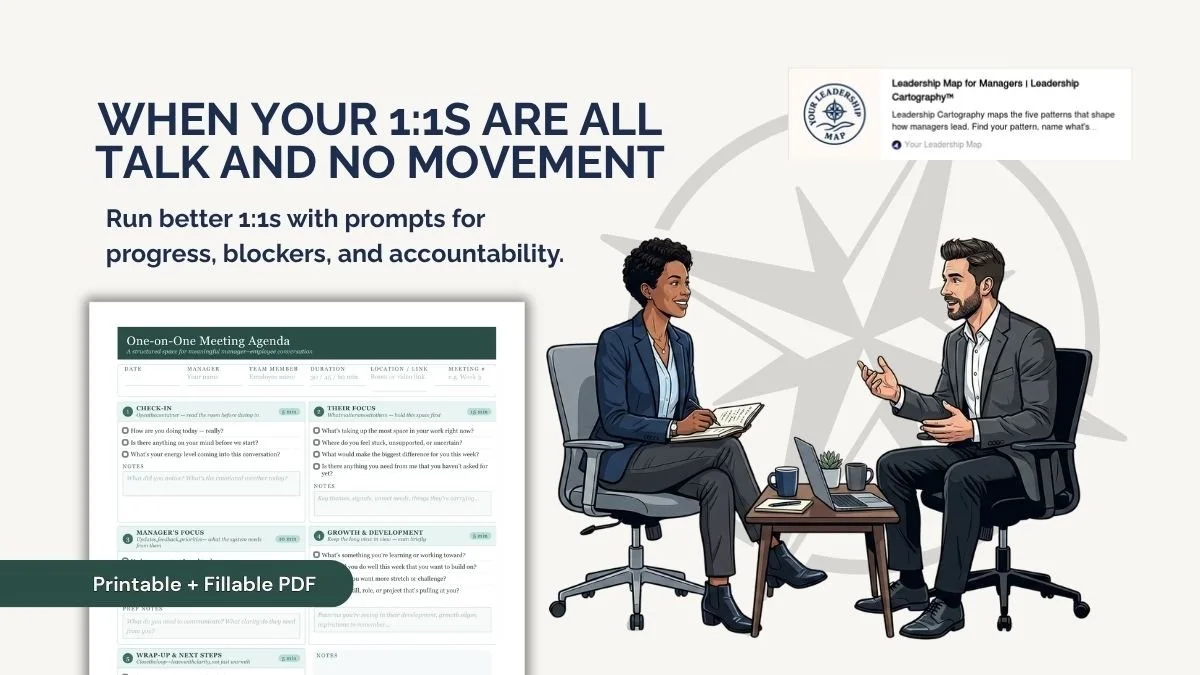
The One on One Meeting Agenda Form is a printable and fillable PDF for weekly or biweekly 1:1s. It gives managers a repeatable format for tracking priorities, blockers, decisions, and follow-up across meetings.
What it helps you do
This tool makes the meeting easier to run and easier to continue. It gives you one place to keep the conversation focused, keep ownership visible, and end with clearer next steps.
What is included / how it works
A simple format for current priorities and progress updates
Space to document blockers before they turn into delays
A section for decisions, next steps, and follow-up
Room for development discussion alongside day-to-day work
A repeatable structure that works across weekly or biweekly meetings
Is This Tool for You?
This tool is for managers who already hold regular one on ones but leave those meetings without enough clarity, follow-through, or visible progress.
Use it when your conversations are helpful in the moment but too much gets lost between meetings.
You may need a different route if the deeper issue is trust, avoidance, performance failure, or a broader breakdown in team communication. This form gives structure to the meeting. It does not replace feedback skill, conflict repair, or role clarity work when those are the real constraints.
Choose Your Next Route
A tool only works if it fits the hand using it.
You have the tactical fix for the friction. Now, make sure you know how to wield it. Get Your Map to see how your inherent orientation interacts with this terrain.

If the issue runs deeper, go to Team Dynamics Map.
If an adjacent pattern is also present, use Feedback Pattern Map.
For the full library, visit The Supply Post.