
How to Handle Underperformance When Coaching Isn't Working
When more coaching stops moving the work, the missing piece is usually structure, not effort.
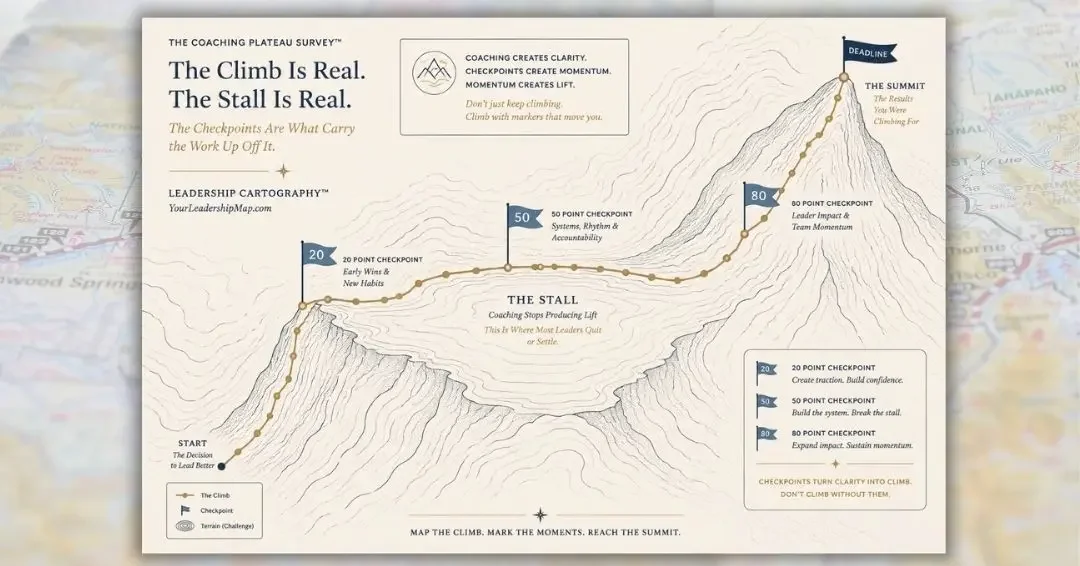
Underperformance that survives repeated coaching is usually a structure problem, not a will problem or a skill problem.
Most managers respond to a missed standard by coaching harder. They have the conversation, the person understands, they agree on the fix, and the same result comes back next time. The effort goes up and the output stays flat, so the manager assumes the person is not trying, or not able. Underneath, the work often has no shared definition of done and no checkpoint between the conversation and the deadline. Without that structure, coaching keeps landing on the person and sliding off the problem. The cost compounds every cycle, in the manager's time, the team's trust, and the person's standing.
What happens when coaching keeps working and the results don't?
Some performance problems don't move no matter how well the conversation goes. I managed one of those for a long time.
He was a food cost analyst who reported to me, and he was brilliant. He could determine the slope of the demand curve for a promotion, item by item, ingredient by ingredient. That work saved the supply chain real money, because we were running a limited-time offer every four weeks, every item perishable, every promotion pulling in up to a hundred ingredients that all had to be ordered against a forecast. If we overpromised at the producer level, a small local farmer gave more of their field to our order, which cost them the room to diversify their crop. If we underpromised at the distributor, the restaurants ran out mid-promotion. These were small farms, so getting the forecast right was part of the responsibility, and his analysis is what kept us from either edge. I loved jumping into the analysis with him. It was always interesting, and I would often learn something new.
He also missed his deadlines. Consistently. He got so far into his own spreadsheets, so deep into getting it exactly right, that the work came in after marketing needed it. And marketing needed it on time for a specific reason: if a promotion was underperforming, they had a narrow window to correct course, and once the analysis came in late, that window was gone.
So I did what you do. I talked to him, and every time he understood, agreed, and committed to a date he genuinely meant to hit. Then the next cycle would come, the work would land late again, and I would feel that particular helplessness of a manager who has said all the right things and watched them change nothing.
For a while I read it as a discipline problem. That interpretation was wrong, and it was doing him a disservice. His care was the thing carrying him past the deadline. He kept going past the point the work needed him to stop, because nothing in how the work was set up ever told him where that point was.
Why does coaching stop moving the work?
The failure is built into how coaching gets used on performance, and it starts before the first conversation.
Coaching aims at the person when the gap is in the structure. A missed standard reads as a personal shortfall, so the manager coaches motivation, focus, or commitment. When the real gap is a missing definition of done or a missing checkpoint, the coaching has nothing to attach to. The person hears it as a verdict on their character while the actual condition stays untouched.
There is no shared definition of finished. Thoroughness has no natural stopping point unless the work provides one. When manager and report never settle what good enough looks like for this deadline, a careful person keeps refining, because more accuracy always feels like more value. The standard the system needs and the standard the person is chasing are two different things, and no one has said so out loud.
Nothing sits between the agreement and the deadline. The conversation happens, the commitment gets made, and then both people wait until the due date to find out whether anything changed. With no visible checkpoint at the midpoint, the manager has no early read and the report has no early signal. The next miss is discovered too late to move it.
Effort and output get treated as the same measure. When a person is clearly working hard, the manager reads the effort and assumes the output will follow. Effort going up does not mean the work is converting into what the system needs on the timeline it needs it. Watching someone try harder is not evidence the structure around them can carry the result.
The role and the person may be a fit question no conversation can close. Sometimes the work genuinely needs something the person does not bring, and repeated coaching becomes a way to avoid saying so. This is the hardest one to see, because it looks identical to the others from the outside. Only structure reveals which one you are actually standing in.
Everything unclear here has a cost, and it compounds on three sides at once. The manager loses hours to conversations that do not land. The team loses trust in a standard that seems to bend for one person. The report loses standing for a problem that was never theirs alone to solve. All of it traces to the same root: the work had no structure, and coaching was asked to do structure's job.
That is where a survey helps.
The Coaching Plateau: Where Is the Work Actually Stuck?
Coaching stops producing lift at different points for different reasons. Four friction points show up again and again on this stretch of terrain. Read them and notice which one sounds like the inside of your own head.
Growth Fog. You can tell the work is not where it needs to be, and you cannot say exactly where the gap sits. Skill, pace, standard, and will all blur together, so every conversation you open comes out vague, because the fog is in your read of the problem before it is ever in the work.
Feedback Lag. You find out the work is off at the deadline, once it is already too late to move it. Nothing between the conversation and the due date gives you an early read, so the same miss keeps surfacing after the one moment you could have caught it. The lag between the work and the signal is what keeps the problem out of reach until the window has closed.
Coaching Gaps. You have coached this person more than once. They understand, they agree, and the work still lands in the same place it did before. The coaching keeps landing and sliding off, because talk alone cannot supply the structure the work is missing.
High Stakes Fear. You have started to wonder whether this is a fit problem, and the next conversation is the one nobody wants to have. The stakes are real for them and for the team, and the weight of that conversation keeps you in another coaching loop instead of the one that is actually due.
One of these friction points is usually louder than the others. That is the one worth locating first.
So which is it for you: the fog, the lag, the coaching, or the conversation?
What you are feeling may be structural.
The coaching keeps landing and the work keeps holding, because the work has no shared definition of done and no checkpoint between the conversation and the deadline. You have been handing a person the responsibility that belongs to the structure around the work.
Start by locating which friction point is showing up first.
Once you know where the work is actually stuck, the route through this terrain already exists.
What does the route through look like?
The Development Approach Map moves through four phases, and each friction point on the Coaching Plateau enters the route at a different place.
Locate the real gap (Week 1). The four possible roots get separated from each other: will, skill, definition, and fit. Most performance conversations collapse them into one blur, which is why they do not land.
Define done together (Weeks 1 to 2). The standard the coaching assumed already existed gets built in plain terms, so a careful person finally has an edge to stop at and a date that means something.
Install checkpoints (Weeks 2 to 4). Staged visibility replaces the single deadline. The work gets checked at the early, middle, and late marks, and the late mark becomes the moment you decide together what ships and what waits.
Read what the checkpoints reveal (Month 2 and beyond). With the work visible along the way, the evidence tells you whether structure closed the gap or whether the terrain was fit all along. The decision comes from what you can see, not from another round of talking.
The map matters less than your entry point. A manager standing on feedback lag needs a different first move than a manager standing on the high-stakes conversation. That is why the survey comes before the route.
What the checkpoints actually did for us
What finally moved my analyst was structure that made the work visible before the deadline. We stopped waiting for the due date to find out where things stood, and we started checking in along the way, with the last check being the one where we decided together what would ship and what would not.
That structure did something the coaching never could. It gave his thoroughness a place to stop. It gave marketing a read early enough to plan around. And it told me something I had gotten wrong for months. The work had been genuinely excellent all along, with no mechanism to convert it into an on-time deliverable, and calling that a performance problem had been my misread. Once the mechanism existed, the question mostly dissolved.
The relief in that reframe was real, and it went both directions. He got to keep being brilliant without being late. I got to stop coaching a problem that was never his character to fix.
What should you do when coaching stops working?
Do
✅ Separate the four roots before you talk. Growth fog, feedback lag, coaching gaps, and fit are different problems, and the conversation lands only once you know which one you are standing in.
✅ Build a shared definition of done. A careful person needs an edge to stop at, and a deadline means little without one.
✅ Put a checkpoint between the conversation and the deadline. An early read at the midpoint tells you more than another talk, and it catches the miss while there is still time to move it.
✅ Decide together what ships at the last check. The late checkpoint is where thoroughness meets the deadline, so name what goes out and what waits.
Don't
❌ Don't coach the same thing twice and expect a different result. When the talk keeps landing and the work keeps holding, the missing piece is structure.
❌ Don't read effort as output. Someone trying harder is not evidence the work will convert on time.
❌ Don't let thoroughness run without a stopping point. Care with no edge runs past every deadline.
❌ Don't use another coaching loop to avoid the fit conversation. When it is a fit problem, more coaching delays the call that is actually due.
Why does this terrain deserve a map?
Underperformance that outlasts coaching looks like a person problem and behaves like a structure problem. The manager keeps refining the conversation while the actual gap, a missing definition of done or a missing checkpoint, sits untouched under all of it. Leadership Cartography reads the friction as evidence that the work was never set up to convert effort into the outcome the system needed. Maybe it's not you, and maybe it's not them either.
This is also where your own leadership lens shapes the route you take. The way you naturally lead is not the same as the move the terrain actually needs, and the gap between them is where a lot of managers get stuck. I lead toward recognition. My instinct with my analyst was to appreciate his depth and get into the analysis with him, and that instinct was real and worth keeping. It was also not the thing that moved the work. The route the terrain needed was structure, and I had to take it even though it was not my first reach. Reading your native lens against the route in front of you is its own kind of literacy.
If you lead with Precision, the risk is installing the checkpoints before anyone understands why they exist, so the structure reads as surveillance. If you lead with Heart, the risk is carrying the missed deadline yourself rather than building the edge the work needs. If you lead with Support, the risk is coaching the person warmly and endlessly past the point coaching can help. Whatever your pathway, the invitation is the same: locate where the work is actually stuck first. The route through already exists.
If this is your terrain, return to the Development Approach Map to choose your route.

Take the source assessment and discover your unique pathway by clicking on the banner.
Related Reading
Coaching Star Performers: Building the Next Level Pipeline
Why Performance Reviews Feel Like a Verdict on Your Worth