
The First Foreman: When Watching People Became a Job
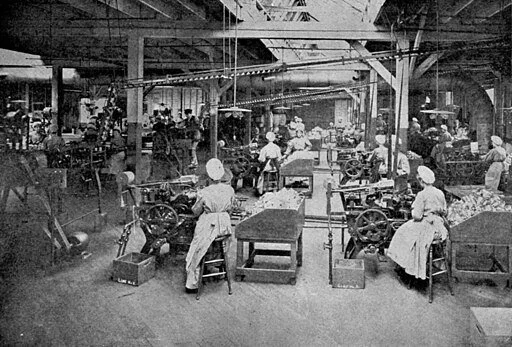
In the 1880s, as factories swelled from small shops to massive industrial complexes, the owner-operator could no longer see every corner of the floor. The solution was the creation of a new class of worker: the foreman. He was the first manager. He did not pick up a hammer. He picked up a clipboard.
The Necessity of the Middleman
As Scientific Management took hold, the goal was to eliminate soldiering—the industrial term for workers pacing themselves. The foreman was necessary because the system was becoming too complex for the workers to self-regulate.
Management needed a proxy to enforce the standard. The foreman's job was to be the human embodiment of the clock. He was the first structural layer of the Delegation Block. By centralizing all the thinking and watching in one person, the system unintentionally taught the workers to stop thinking and start waiting for instructions.
The Job Description: The 1890s Shop Foreman
If you were a Shop Foreman in 1895, you were the most hated and necessary man in the building. You were caught between the owner who wanted output and the worker who wanted to survive the day.
Your day was spent standing. You watched for rhythm breaks. You listened for the sound of a machine idling. You had the power to hire and fire on the spot, usually based on mettle or loyalty. You were not a leader in the modern sense. You were a pressure valve. You were paid to ensure the underground map of the factory was followed to the second, leaving no room for the workers to navigate the terrain themselves.
The Delegation Block Map
We see the remnants of the First Foreman today in the manager who feels they must approve every email or see every status update. This is where the Delegation Block begins.
When a system is built on the 1880s idea that watching is the same thing as managing, authority collapses. The leader becomes a bottleneck because they are still playing the role of the Shop Foreman. They are afraid that if they stop watching, the work will stop happening. This is not a lack of trust in the team. It is a lack of trust in the map.
Leadership Cartography: Reclaiming the Sightline
In Leadership Cartography, we notice when we are standing on the foreman’s mezzanine.
We lead through our inherent pathways.
A Precision leader will look at each touchpoint in the system first. If they are hitting a Delegation Block, they often try to solve it by adding more touch points, more trackers, more reports, more meetings. They are leaning into their natural drive for legibility, but they are doing it within an 1880s terrain that treats every touchpoint as a form of surveillance.
The practice of Cartography allows you to notice when your drive for Precision is being used to build a cage rather than a coordinate. Once you see the terrain, you realize that your job is not to watch the people. It is to steady the ground so they can watch the work themselves.
If you stepped off the mezzanine and stopped watching for one day, would the work collapse, or would you finally see exactly where the system is failing to support the people?
Tier 1: Discovery Do you feel like a bottleneck in your own department? Take the Leadership Style Quiz to identify your inherent pathway and see how your map is currently drawn.
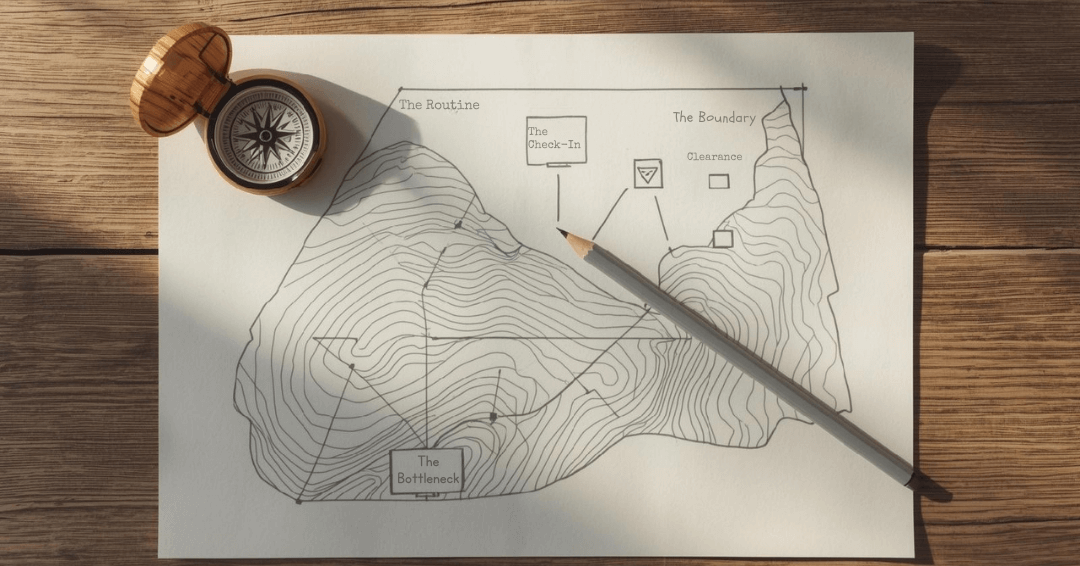
Tier 2: Tactical If you are struggling to let go of the watchdog role, explore our Delegation Block Map to see how to redistribute responsibility without chaos.
Tier 3: Subscription Ready to stop being a human firewall and start being a Cartographer? Join The Map Drawer for a standing library of leadership maps that help you read the terrain of trust and authority.