
The End of Child Labor: When We Traded Hands for Minds
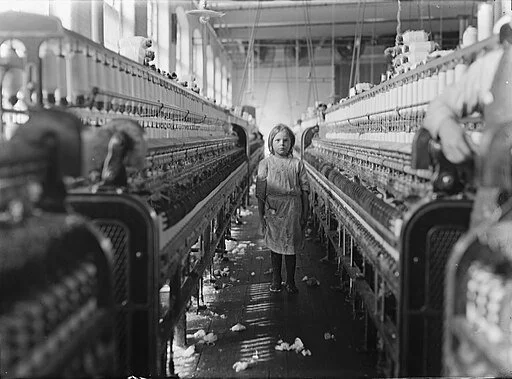
Lewis W. Hine for the National Child Labor Committee, Public domain, via Wikimedia Commons
In the late 19th century, children were the ideal industrial workers. They were small enough to crawl under moving looms to clear jams and compliant enough to accept wages that were a fraction of an adult's pay. In the 1880s, over a million children between the ages of 10 and 15 were part of the American workforce. They were not seen as learners. They were seen as low-friction components of the machine.
The Necessity of the Transition
The move to end child labor was driven by a mix of humanitarian outrage and economic necessity. As machines became more complex, the "small hands" that could clear a jam were no longer enough. The industrial terrain began to require literacy, basic math, and the ability to follow complex instructions.
The passage of the Fair Labor Standards Act in 1938 did more than just clear the factories of minors. It established a new coordinate on the map: the period of development. By moving children from the mill to the classroom, society collectively decided that the early years of a person's life were for orientation, not just production. This created the first modern expectation that a worker should be "developed" before they are "deployed."
The Job Description: The 1920s Newsie
If you were a Newsie in 1920, your job description was a daily battle for territory. You were an independent contractor at ten years old. You bought your papers from the publisher with your own pennies and sold them on street corners.
There was no development approach. There was no manager to help you navigate the friction of the street. You learned through the blunt force of the terrain. If you didn't sell your stack, you didn't eat. The system relied on your desperation to keep the gears turning. When child labor ended, this raw, unshielded exposure was replaced by the structure of the school day. The "Newsie" was replaced by the "Student," and the expectation of a safe learning environment was born.
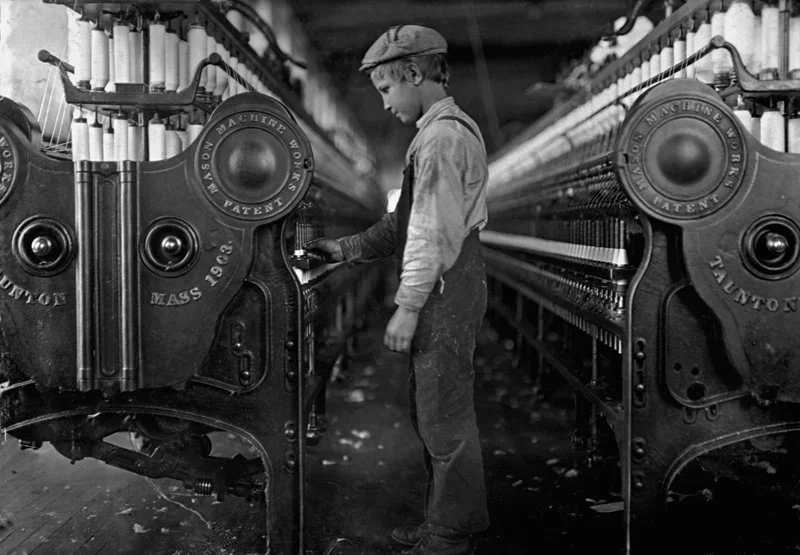
Lewis Hine, Public domain, via Wikimedia Commons
The Development Approach Trap
We see the remnants of this shift today in the way we struggle with the Development Approach on our teams. We have inherited a map that still treats learning as an expense rather than an investment.
This creates a Pain Point Cluster where the pressure for immediate output collides with the reality of the learning curve. When a manager feels the thrash of a new hire not getting it fast enough, they are often standing on a 19th-century industrial rut that says any time not spent producing is a financial leak. They forget that the modern worker is not a swappable component, but a student mind that requires a steady orientation.
Leadership Cartography: Orientation through Heart
In Leadership Cartography, we notice when the pressure for production is suffocating the space for development.
We lead through our inherent pathways.
A Heart leader will naturally take the temperature of the people first. When they see a team member struggling with a new skill, they don't see a "broken part." They see a human who has lost their coordinates. Their inherent drive is to restore the safety of the terrain so the person can start learning again.
The practice of Cartography allows you to notice when your drive to lead with Heart is being labeled as soft by a system that still secretly wishes for the compliance of the old factory floor. Once you see the terrain, you realize that your job is not to "lower the bar." It is to protect the space where the mind can actually grow.
I find myself wondering: if we stopped treating the learning curve as a leak, would we find that the student mind is actually the only thing keeping the mission alive?

Tier 1: Discovery Do you feel like your team is being treated as parts in a machine? Take the Leadership Style Quiz to identify your inherent pathway and see how you naturally prioritize human development.
Tier 2: Tactical If you are struggling to balance the need for output with the need for growth, explore our Development Approach Page to see how to steady the learning curve.
Tier 3: Subscription Ready to stop managing "hands" and start leading minds? Join The Map Drawer for a standing library of leadership maps that value human growth over industrial compliance.