


The History of Work
Every management theory
on this shelf was invented
to solve someone else's problem.
In someone else's century.
We are still using them. The org chart, the performance review, the chain of command — all of it designed for a world that no longer exists. The History of Work traces where these ideas came from, what problems they were actually built to solve, and why applying them today produces exactly the friction you keep running into.
The map was never drawn for you in the first place.
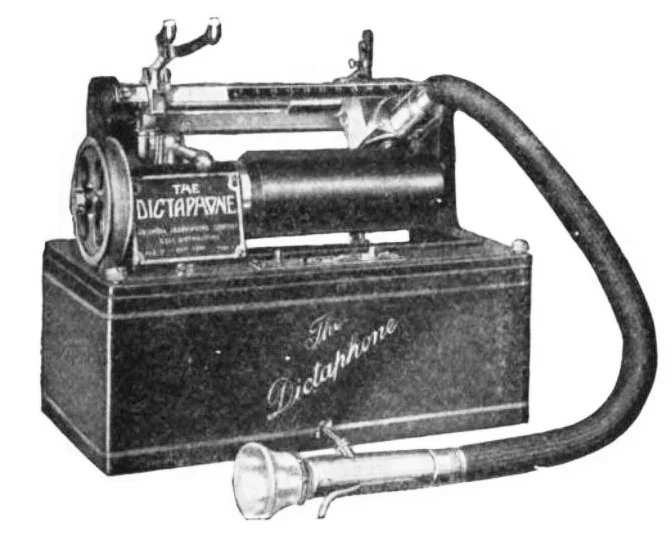
The Dictaphone: When the Boss’s Voice Arrived Without Him
In 1907, Columbia Graphophone gave every executive in America a machine that let him talk to his employees without ever speaking to them. The stenographer who used to sit across from her boss, asking questions in real time, now sat alone with a rubber listening tube and did her best to understand what the cylinder meant. That logic, that the manager's time and the worker's time don't need to overlap, still governs most workplaces today. Every async tool since has inherited it.

The Rolodex and the Quantification of Connection
Arnold Neustadter patented the Rolodex in 1956, a rotating card file that held business contacts on a desktop spindle in alphabetical order.

The Pencil and the Permanent Record
In the 1800s, mass-produced pencils made writing portable, erasable, and accessible to everyone. But the convenience of documentation created an expectation that everything must be recorded, tracked, and preserved. The pencil didn't just enable note-taking - it created the culture of constant documentation. Explore how this history connects to Precision™ leadership in Leadership Cartography.

History of Vacation Time: When Rest Became Work Policy
When vacation time spread in the early twentieth century, it did not arrive as a simple act of care. Employers learned to justify rest once exhaustion started damaging output, stability, and retention. That older logic still shapes modern leadership, especially for managers who protect recovery for everyone else while treating their own as negotiable.