
History of Vacation Time: When Rest Became Work Policy
When time off became something work could justify
Vacation time in the United States spread in the early twentieth century when employers began treating rest as something work could justify. Long hours, industrial fatigue, child labor, and rising concern about accidents, illness, and turnover made recovery easier to defend. Paid time off was not distributed equally at first. Salaried workers got it earlier than hourly workers. That history still matters because many managers still protect recovery for others while treating their own rest as negotiable.
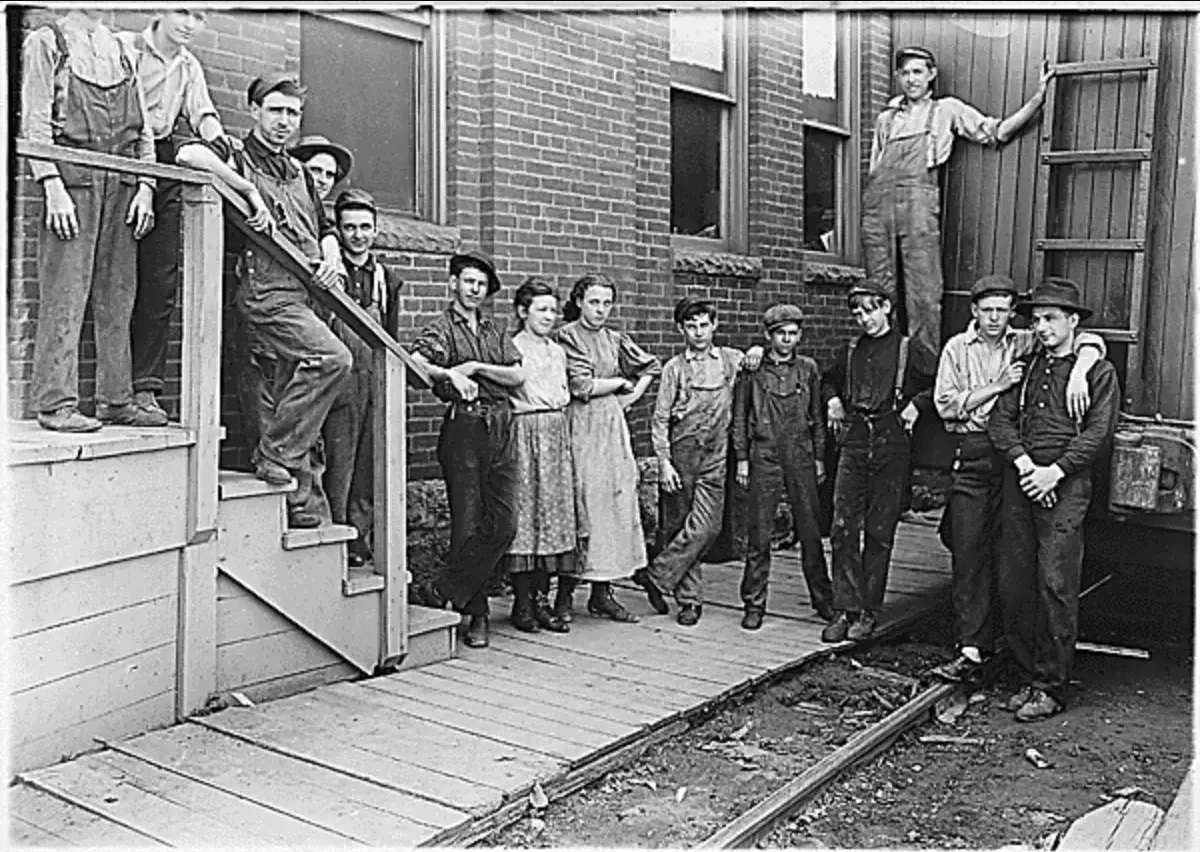
In the nineteenth century, many Americans worked 70 hours or more per week, and the burden of industrial labor did not fall on adults alone. Children worked in mills, mines, and factories under the same logic of endurance, risk, and output. Long hours, dangerous machinery, and repetitive strain showed up as accidents, illness, and lost output.
Rest entered that world once exhaustion became too costly to ignore. Before paid vacation became common, employers, reformers, and physicians were all confronting the same fact from different angles: people could not be worked continuously without consequence. Fatigue was becoming a medical concern, but it was also a production problem.
Paid vacation in the United States was a relatively recent development, and before 1940 much of the initiative came from management. Employers saw vacations as a way to increase productivity, reduce turnover, and attract and keep workers. Time away from work became easier to defend once recovery could be tied to output.
The cost of living inside this system
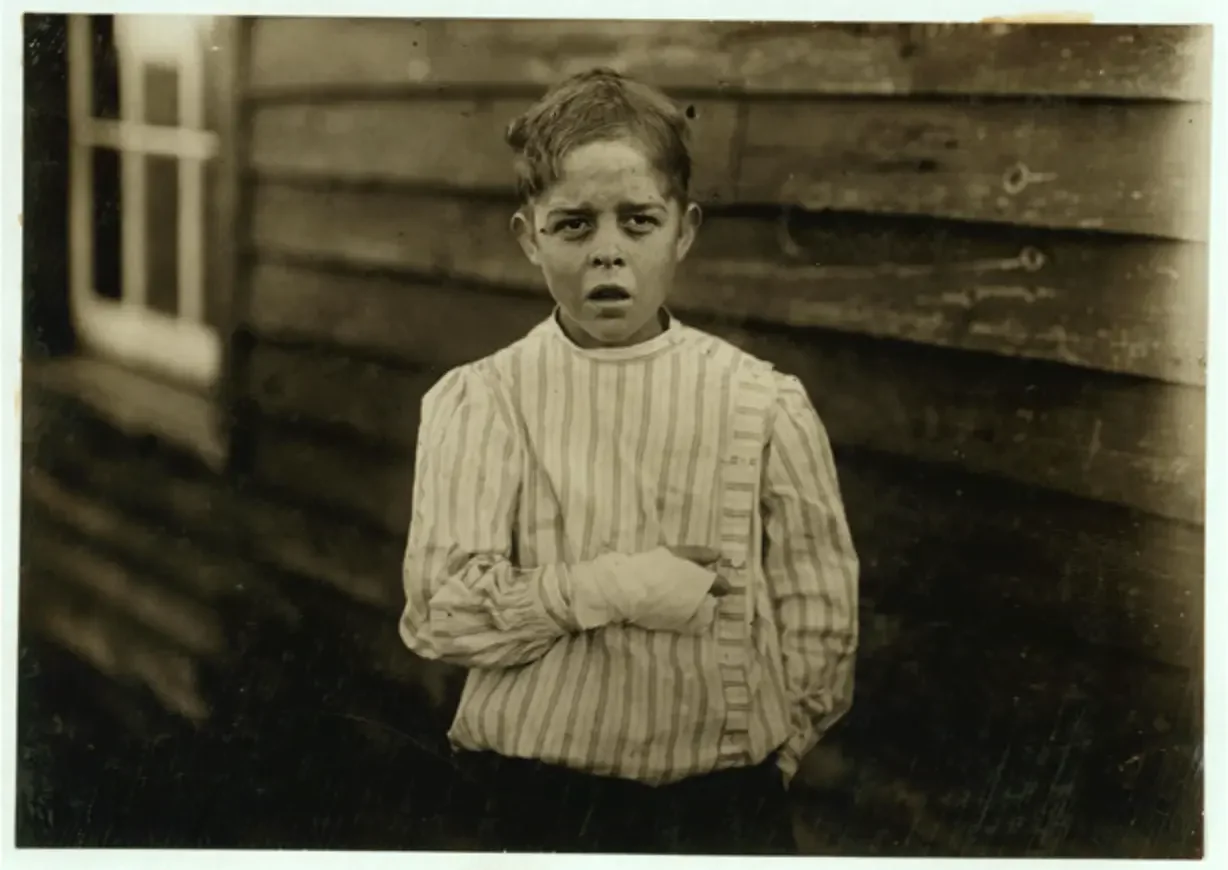
Figure 2: Accident to young mill worker. Giles Edmund Newsom (Photo October 23rd, 1912) while working in Sanders Spinning Mill, Bessemer City, N.C., August 21st, 1912, a piece of the machine fell on to his foot mashing his toe. This caused him to fall on to a spinning machine and his hand went into unprotected gearing, crushing and tearing out two fingers. He told the Attorney he was 11 years old when it happened. His parents are now trying to make him 13 years old. The school census taken at the time of the accident makes him 12 years old (parents’ statement) and school records say the same. His school teacher thinks he is 12. His brother is not yet 11 years old. Both of the boys worked in the mill several months before the accident. His father, (R.L. Newsom) tried to compromise with the Company when he found the boy would receive the money and not the parents. The mother tried to blame the boys for getting jobs on their own hook, but she let them work several months. The aunt said "Now he’s jes got to where he could be of some help to his ma an’ then this happens and he can’t never work no more like he oughter," Bessemer City, North Carolina, October, 1912. Source: Library of Congress, Prints & Photographs Division, National Child Labor Committee Collection [reproduction number LC–DIG–nclc–02697].
This is one of those stories where the cost matters more than any single job title. Industrial labor extracted from whoever could be made to endure it, including children.
For industrial workers, exhaustion was physical and immediate. It showed up in slower reaction time, poor concentration, higher injury risk, and bodies that did not have enough time to recover before the next shift. That burden did not fall on adults alone. Children worked in mills, mines, factories, and street trades under the same logic of endurance, risk, and output.
That changed how rest was discussed. Once fatigue became measurable, recovery became easier to defend inside institutions that had little reason to care otherwise. Some employers backed vacations because time away helped stabilize the workforce and protect production.
Who got rest first also tells the story. Paid vacation reached salaried workers before it reached hourly wage earners. Office staff, managers, foremen, and supervisors were more likely to receive paid time off early on. Hourly workers lagged behind. Rest entered the system where labor was considered more valuable, more stable, and more worth retaining.
How does this history still shape leadership today?
The historical pattern still shows up in modern leadership. Vacation became easier to defend once employers could connect rest to productivity, retention, and workforce stability. Many managers still work inside that same logic. They protect time off for other people, while their own recovery stays conditional because the structure still requires someone to absorb the load before, during, or after the break.
If you lead with Lead with Heart™, you may recognize the pattern immediately. You make sure your team takes time off. You encourage recovery. You protect their space where you can. Then you absorb the extra load yourself. You answer emails during your own break. You keep one eye on the system while everyone else rests. You come back tired because you never really left.
That shows up clearly in the Time Management Map. The issue is whether the structure you are working inside allows you to take time off without paying for it before, during, or after. Early vacation policy gained traction when rest could be defended in terms employers respected: retention, output, stability. Many managers are still living inside that same bargain. Recovery is allowed, but only if someone else covers the cost. Too often, that someone is you.
Industrial fatigue researchers understood something modern work still resists. People do not keep going indefinitely because the calendar says they should. Once a system treats one person’s exhaustion as less urgent because they are the one holding everything together, the damage is already underway.
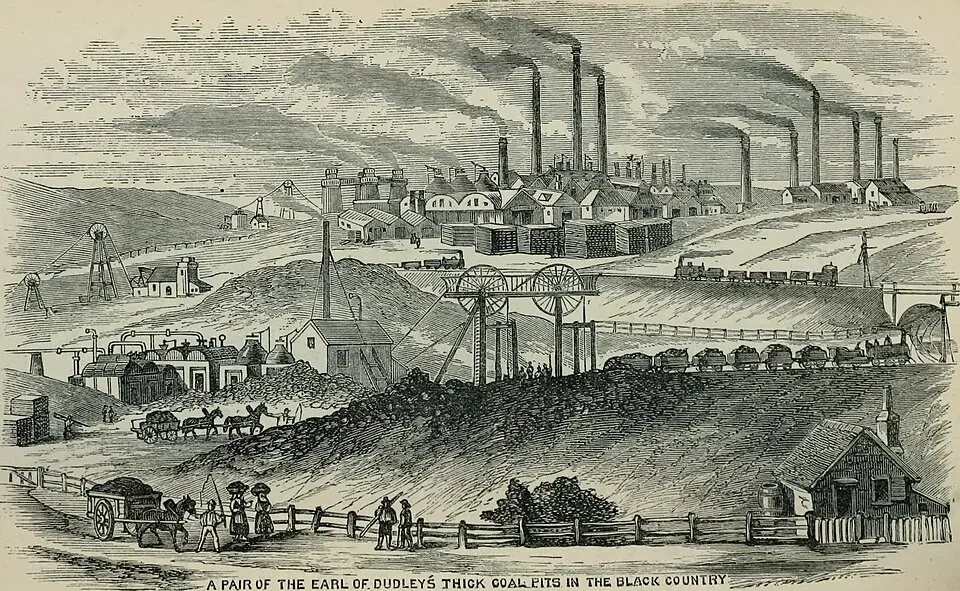
Griffiths, Samuel, editor of "The London Iron Trade Exchange", No restrictions, via Wikimedia Commons
If time away from work became easier to defend once exhaustion started damaging output, what does it say about modern leadership that the person protecting everyone else’s recovery is so often expected to go without their own?
Where does this land for you? The systems we inherit do not end with us. They continue in what we normalize, what we protect, and what we ask other people to carry. Legacy lives there.

Sources
Robert Whaples, “Hours of Work in U.S. History,” EH.net. Strong for the long-hours context and the scale of nineteenth-century workweeks.
Joseph Altonji and Jennifer Oldham, “Vacation laws and annual work hours,” Federal Reserve Bank of Chicago, 2003. Strongest source for the point that early paid vacations were often supported by management for productivity, turnover, and retention reasons.
Steffan Blayney, “Industrial Fatigue and the Productive Body,” Social History of Medicine, 2019. Strong for the framing of industrial fatigue as a medical and scientific concern tied to productivity.