
The Stopwatch and the Math of Human Motion
The Origin of Scientific Management
Invented by Frederick Winslow Taylor in the late 19th century, Scientific Management (or Taylorism) used "time and motion studies" to break work down into standardized, mathematical parts. By timing every movement with a stopwatch, Taylor sought to eliminate human inefficiency and transfer control from the skilled worker to the manager. This legacy lives on today in digital surveillance metrics and the modern obsession with performance data over human autonomy.
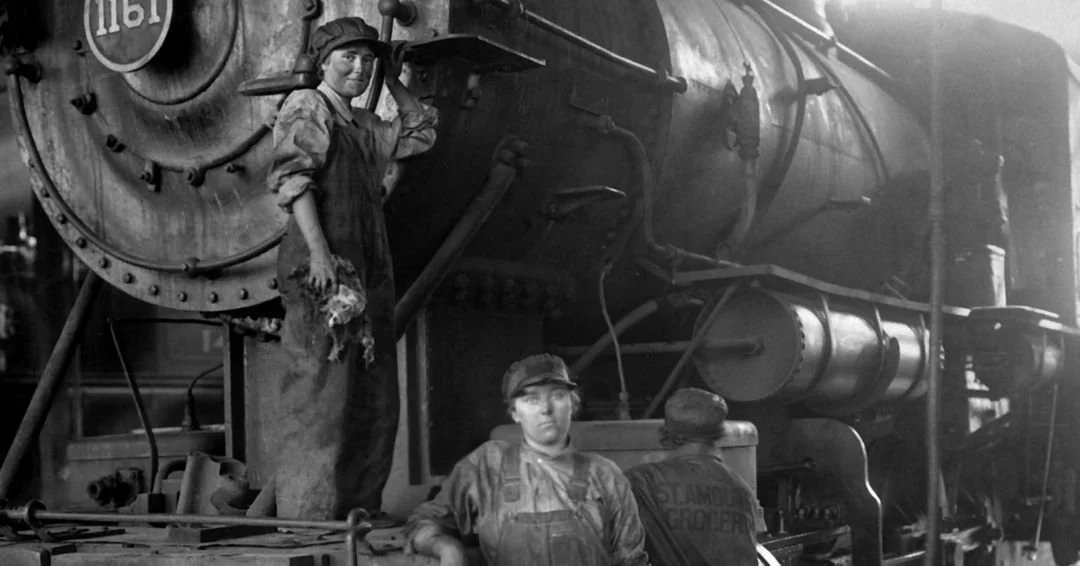
Frederick Winslow Taylor stood in the Midvale Steel Works with a stopwatch and a notebook. He wasn't watching the machines; he was watching the men. He began to time every individual movement a worker made—lifting a shovel, turning a dial, walking to a pile of pig iron. He was looking for the "one best way" to perform a task. He believed that if he could break work down into its smallest mathematical components, he could eliminate "soldiering"—the tendency of workers to pace themselves rather than the machine.
The Necessity of Scientific Management Before Taylor, work was governed by "rule of thumb." Skilled tradesmen learned their craft through years of apprenticeship and held the "secrets" of production in their own heads. This was inefficient for the new industrial titans. If a skilled worker walked out, the knowledge went with them. The factory owners needed a way to standardize production so that any "average" man could be trained to do a specific task at a specific speed. Taylor’s scientific management was the solution. It wasn't about the worker’s skill; it was about the manager’s math.
The Job: The Time Study Observer This shift created a new, specialized role: the Time Study Observer. This person didn't know how to forge steel or run a lathe. Their job was pure Precision™. They stood over a laborer with a stopwatch, breaking a three-minute task into fifty or sixty small elements. They recorded the "standard time" for each motion.
The Time Study Observer was the human interface of surveillance. They stripped the worker of their autonomy and turned their physical energy into a data point. If a worker moved too slowly, the Observer noted the "false movement". They then created "instruction cards"—the original ancestor of the modern SOP—that told the worker exactly how to move, for how long, and with which tool. The worker was no longer a person; they were a gear in a machine designed by someone else.
The Modern Correlation Today, we no longer have men with stopwatches standing behind our desks, but we have digital "Time Study Observers" built into every tool we use. We see this in the Precision™ pathway when we analyze active status on Slack, time to first response in customer service tickets, or lines of code in software development.
We have inherited Taylor’s belief that if we can measure it, we can manage it. Managers today often feel the pressure to act as consulting engineers for their teams, trying to find the one best way through data analytics and surveillance-style metrics. We believe that if the math is right, the team will be efficient. But in doing so, we often ignore the human element that Taylor himself famously struggled to understand.
If we have successfully turned every movement of our digital work into a math problem, have we actually improved our leadership, or have we just perfected a system that views humans as the most inefficient part of the machine?
Your Next Step
1️⃣ Identify Your Terrain: Are you operating in a system designed for a different century? Take theLeadership Style Quiz to see how you currently navigate pressure.
2️⃣ Equip Your Team: Stop being the manual switch for every task. Grab the Manager's Conversation Pack to give your team the scripts they need to solve their own friction.
3️⃣ Sustain the Transformation: Don't navigate the dark alone. Join The Map Drawer™ subscription to receive weekly Field Notes and tactical tools designed to help you build a self-sustaining leadership system.