
Keeping Saint Monday – The Original Sunday Scaries
How a 19th-century rebellion for breath created the modern work week.
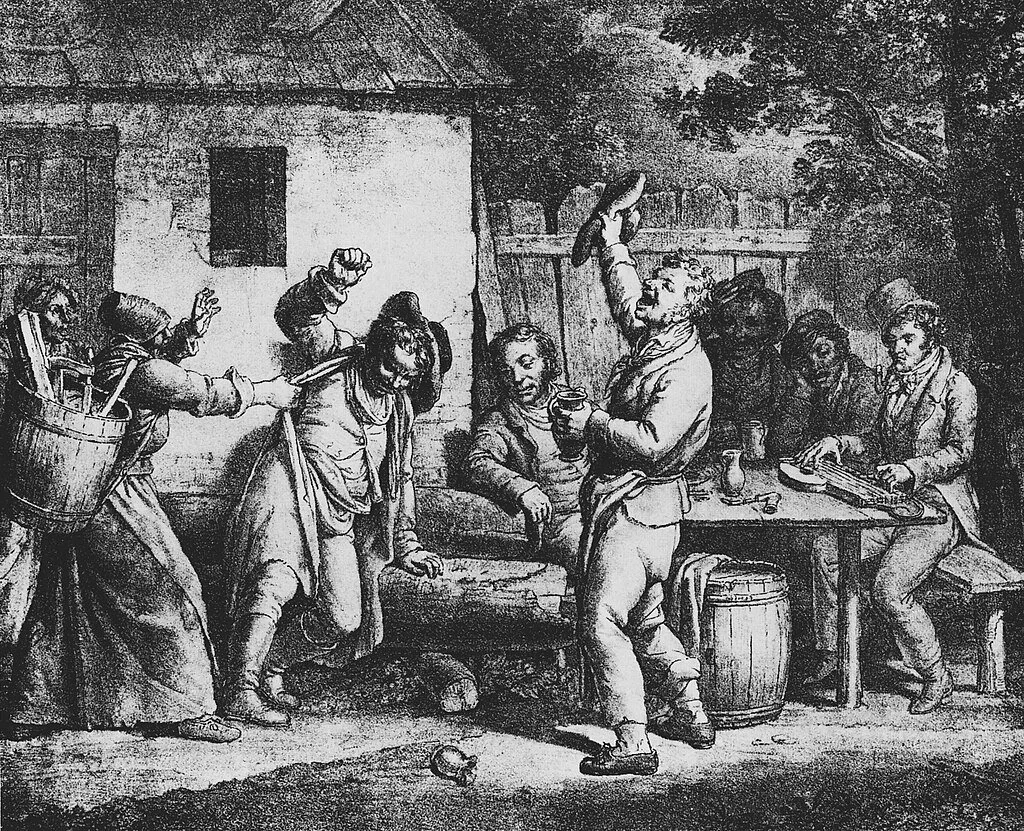
Image Credit: Saint Monday in the Prater wine tavern. Giuseppe Lacedelli, Public domain, via Wikimedia Commons
The Victorian factory was a symphony of deafening iron. The rhythmic thud of the steam hammer and the screech of the power loom created a pace that was entirely indifferent to the human heart. By the mid-1800s, the industrial machine had successfully colonized the sun, using gaslight to extend the working day far into the night. Workers were expected to be as tireless as the engines they fed, operating on a six-day cycle that left the body brittle and the spirit depleted. Sunday was the only reprieve, a single day of forced piety or frantic socialization that rarely provided the deep recovery the biology required.
The Necessity of the Rebellion
By Monday morning, the systemic tension reached its breaking point. Across Britain and America, a silent, uncoordinated rebellion took hold. It was called "Keeping Saint Monday". Thousands of workers simply refused to show up, claiming Monday as a day of personal agency and physical recovery.
This was not a formal strike for higher wages; it was a strike for breath. The "Saint Monday" phenomenon was a visceral signal that the human map and the industrial map were fundamentally misaligned. The workers were signaling a need for what we now call Lead with Heart™—the understanding that emotional and physical steadiness is not a luxury, but a prerequisite for any sustainable system.
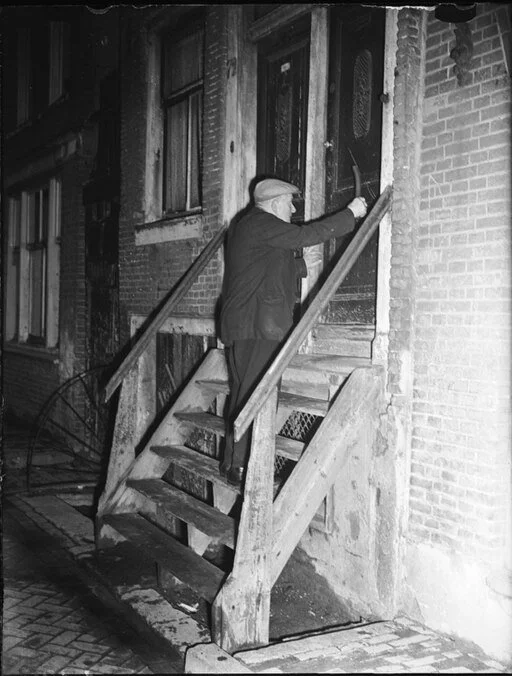
The Knocker-Upper Man
Image Credit: IISG, CC BY-SA 2.0 <https://creativecommons.org/licenses/by-sa/2.0>, via Wikimedia Commons
The Job: The Knocker-Upper Man
This collective absence drove Mill Managers and owners to the brink of financial panic. A cold engine was a loss of profit. To break the tradition of Saint Monday, owners created a new, intrusive role: The Knocker-Upper Man.
Armed with a long bamboo pole or a pea-shooter, his entire job description was to patrol the cobblestone streets at 5:00 AM, tapping on the bedroom windows of the workers until he saw a face. He was the human alarm clock, tasked with dragging the biology of the worker back into the service of the machine. His presence was the physical manifestation of a system that did not trust the worker's own rhythm.
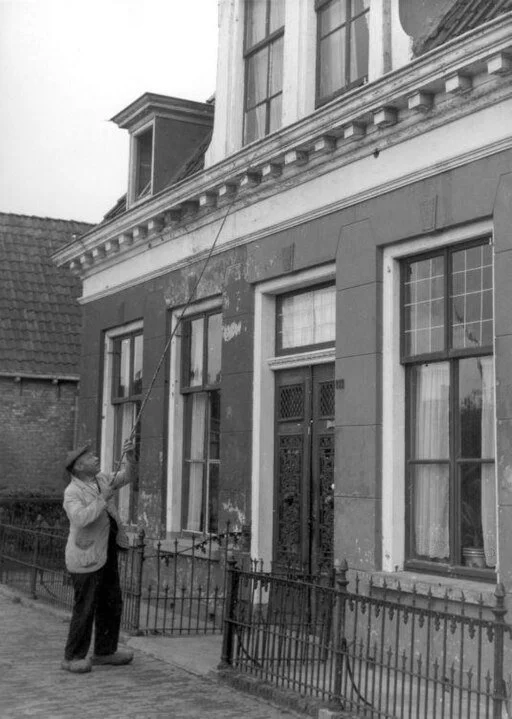
The Knocker-Upper Man
Image Credit: Nationaal Archief (flickr.com)
The Map Marker: Modern Quiet Quitting
Soon after, the Bundy Clock was invented to replace the subjective word of the Timekeeper. The system no longer trusted the human report; it demanded a mechanical stamp. The five-day work week was eventually "granted" not as a gift of mercy, but as a strategic bribe to ensure that workers would actually be present on Tuesday.
Modern managers still fight this ghost today, calling it "quiet quitting" or the "Sunday Scaries". In Leadership Cartography™, we recognize this as the same systemic signal: the biology is revolting against the pace. This narrative is a core signal in our Overwhelmed Manager coordinates. It is the history of why we feel like we are constantly "catching up" to a machine that never sleeps.
This historical revolt for recovery is the direct ancestor of our modern exhaustion, a connection you can explore deeper by identifying your own specific signature within the Overwhelmed Type Map.
Is your weekend a genuine period of rest, or is it just the "unpaid maintenance" required to get you back to the machine by Tuesday?

Lowering the Pressure: Saint Monday
The biology is still revolting against the pace. If your weekend feels like "unpaid maintenance" rather than genuine rest, it is time to mark a new trail. Let us find a better way to navigate.
Tier 1: Your Steady Next Move Not sure why the "Sunday Scaries" are hitting so hard? Receive clarity on your natural leadership style by taking the five-minute style quiz to see how your rhythm interacts with the system.
Tier 2: The Lead with Heart™ Relief If the systemic tension has reached its breaking point for your team, receive the Burnout Prevention Assessment. This is your small, immediate way to stop the "Monday morning revolt" by aligning the work to the human heart.
Tier 3: Access The Map Drawer For a long-term way to protect the biology of your team and find sustainable steadiness, secure your seat in The Map Drawer. Receive an entire library of tactical tools designed to lower the pressure.