
When Team Conflict Keeps Coming Back After the Conversation
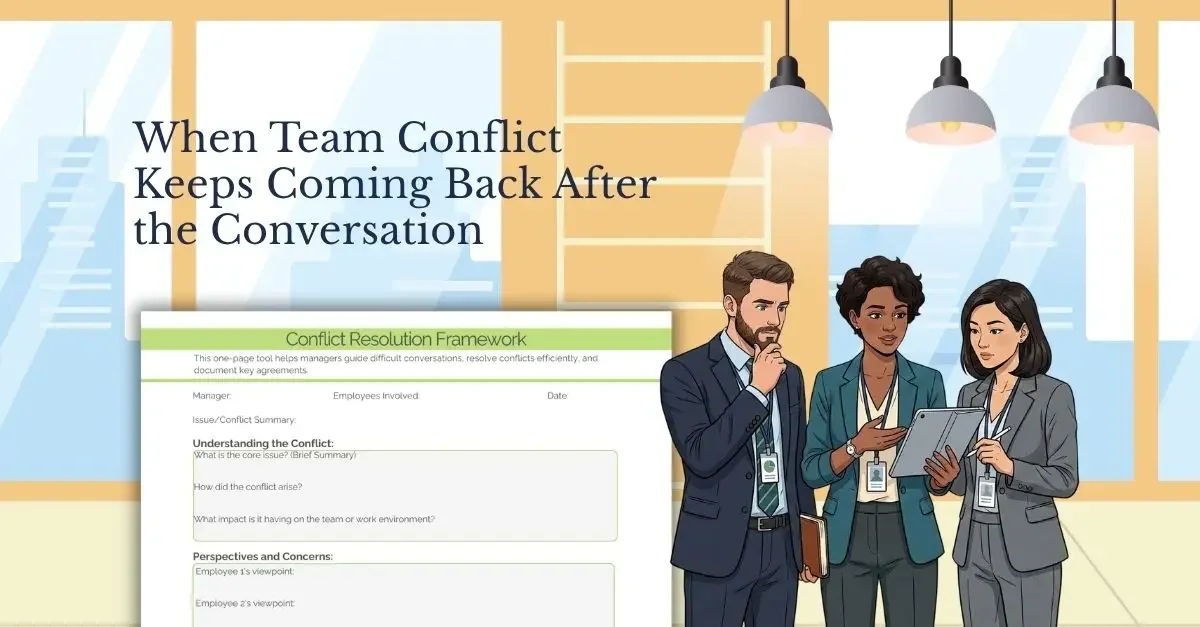
Team conflict gets harder to contain when the conversation has no written structure.
Two employees are frustrated. Work is starting to slow down. The issue has moved beyond a passing disagreement, and now you need to guide the conversation without turning it into blame, avoidance, or a vague promise to “communicate better.”
A conflict resolution framework gives the conversation a place to go.
It helps the manager capture what happened, what each person is experiencing, what the team impact is, what was agreed, and what needs to happen next.
Why employee conflict needs structure
Conflict conversations can drift quickly.
One person starts with the missed deadline. The other brings up tone from 3 weeks ago. Someone explains their intent. Someone else talks about impact. The manager tries to keep the conversation fair, but the issue keeps spreading.
Without structure, the conversation can become a collection of reactions.
A manager needs a way to separate the issue, the impact, the viewpoints, the common ground, the agreement, and the follow-up. Those are different parts of the conversation. When they get mixed together, people may leave feeling heard without being clear on what has changed.
That is where many conflict conversations fail.
The conversation happens. The tension softens for a moment. Then the same pattern returns because the agreement was never made concrete enough to survive the next pressure point.
What unclear conflict resolution costs
Unclear conflict resolution creates extra work for everyone around the conflict.
The manager keeps checking the temperature. The employees keep interpreting each other through the last unresolved moment. Other team members start adjusting their behavior to avoid getting pulled in.
The work also starts carrying the conflict.
Updates get thinner. Decisions slow down. Small requests feel loaded. People start protecting themselves instead of moving the work cleanly.
The cost is not only emotional. It is operational.
A team cannot keep losing time to conflict that has never been clearly discussed, documented, and followed up on.
What changes when the conversation has a framework
A written framework gives you a steadier way to guide the conversation.
The issue can be summarized without turning the whole discussion into a debate about history. Each person’s viewpoint has a place. The impact on the team or work environment can be stated clearly. Common ground can be captured before solutions are discussed.
The agreement also becomes easier to test.
When action steps are written down, each person knows what they are responsible for. When a follow-up date is set, the conversation does not depend on memory, mood, or whether the issue resurfaces loudly enough to demand attention again.
The framework does not make conflict comfortable.
It makes the conversation easier to hold in one place.
The tool
The Conflict Resolution Framework is a one-page worksheet for managers who need to guide a difficult employee conflict conversation and document what was agreed.
It is designed for situations where the conflict is clear enough to discuss directly, but the conversation needs structure so it does not drift into blame, defensiveness, or vague repair language.
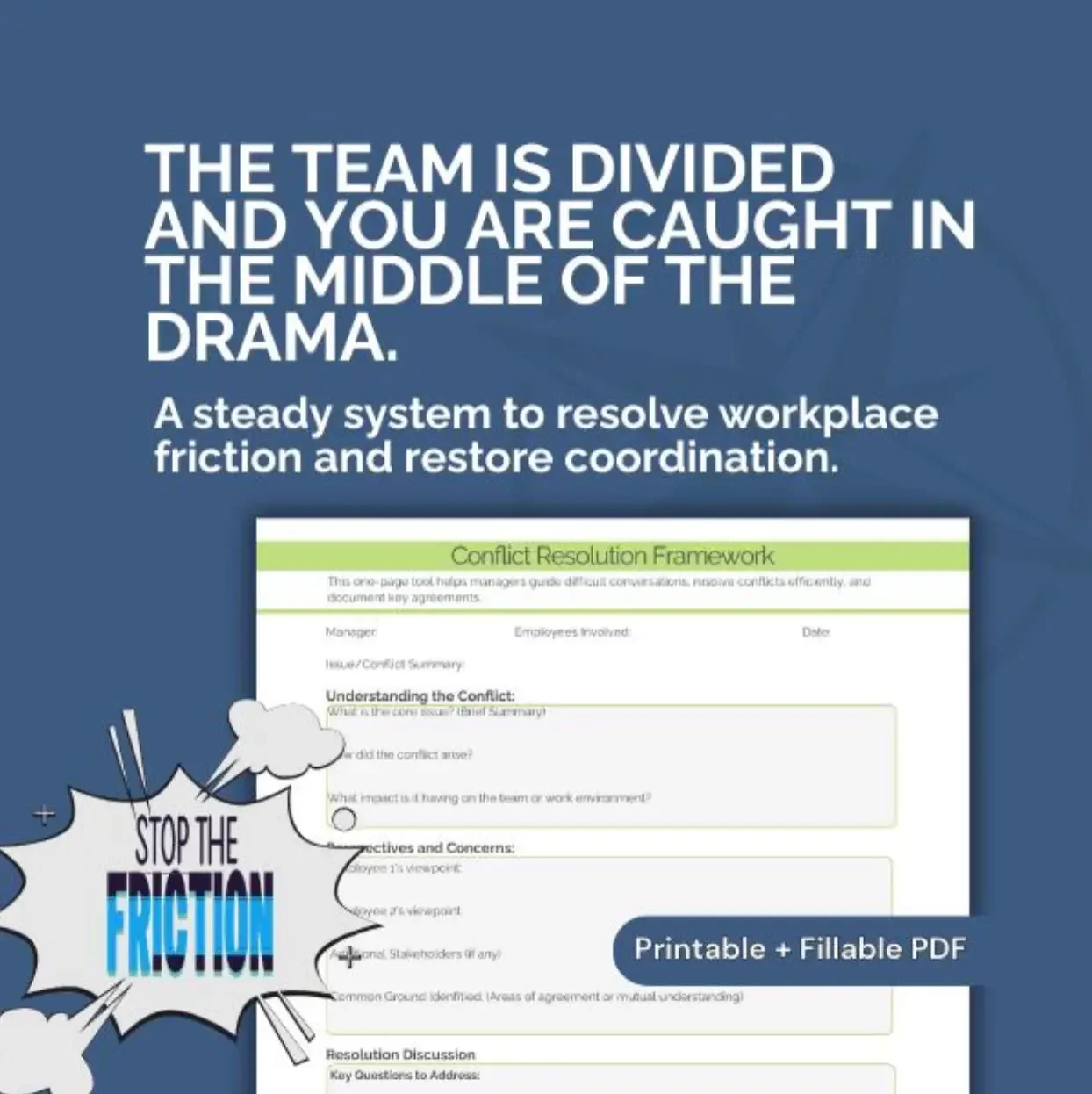
The tool gives the manager one place to capture the issue, how the conflict arose, the impact on the team, each employee’s viewpoint, common ground, proposed solutions, action steps, final notes, and a follow-up check-in date.
What it helps you do
This tool helps you move a conflict conversation from reaction to documented agreement.
It gives both employees a place to be heard without letting the conversation stay stuck in competing versions of the story. It also helps the manager stay focused on what needs to change after the conversation ends.
What is included
A conflict summary section for capturing the issue in plain language.
Questions for understanding how the conflict arose and how it is affecting the team.
Space for each employee’s viewpoint, concerns, and any additional stakeholder input.
A resolution discussion section for common ground, ideal outcomes, compromises, and prevention.
An action plan section with steps for each employee, manager support, final notes, and follow-up.
Is this tool for you?
This tool is for managers who need a simple structure for resolving workplace conflict between employees.
Use it when two people are stuck in tension, the issue is affecting the work environment, and you need a clear record of what was discussed and agreed.
It is especially useful when the conflict has already taken up more space than it should, and you do not want the conversation to end with loose promises.
A different route is needed when the conflict involves harassment, discrimination, retaliation, threats, safety concerns, or behavior that must move through HR, legal, or formal reporting channels. This tool can support documentation and clarity. It does not replace policy, investigation, legal advice, or formal mediation when those are required.
It also does not solve the conflict for you.
It gives the conversation a structure strong enough to capture what happened, what was decided, and what happens next.
Choose Your Next Route
If this problem is showing up here, start with Conflict Resolution Framework.
If the issue runs deeper, go to Team Dynamics Map
If you are unsure whether to mediate, coach, clarify, or step back, read What Is Your Real Role in Team Conflict?
For the full library, visit The Supply Post.