
The Managing Up Visibility Gap: When You See What the People Above You Can’t
You have been watching the same pattern long enough to know it is not random. Decisions keep stalling. People keep sitting on issues that should have been escalated sooner. You have raised it in your one-on-one, in follow-up notes, and in the part of the meeting where it should have been possible to say it plainly.
The response keeps sounding the same. A nod. A short exchange. Then the agenda moves on and the pattern keeps going.
This is the managing up visibility gap. You can see the issue clearly, but what you are seeing is not reaching the people above you in a form they can act on.
Why executives miss what middle managers can see
Senior leaders are usually looking at a thinner version of the work. They are getting summaries, status language, and outcome reports that have already passed through several layers before they reach the room.
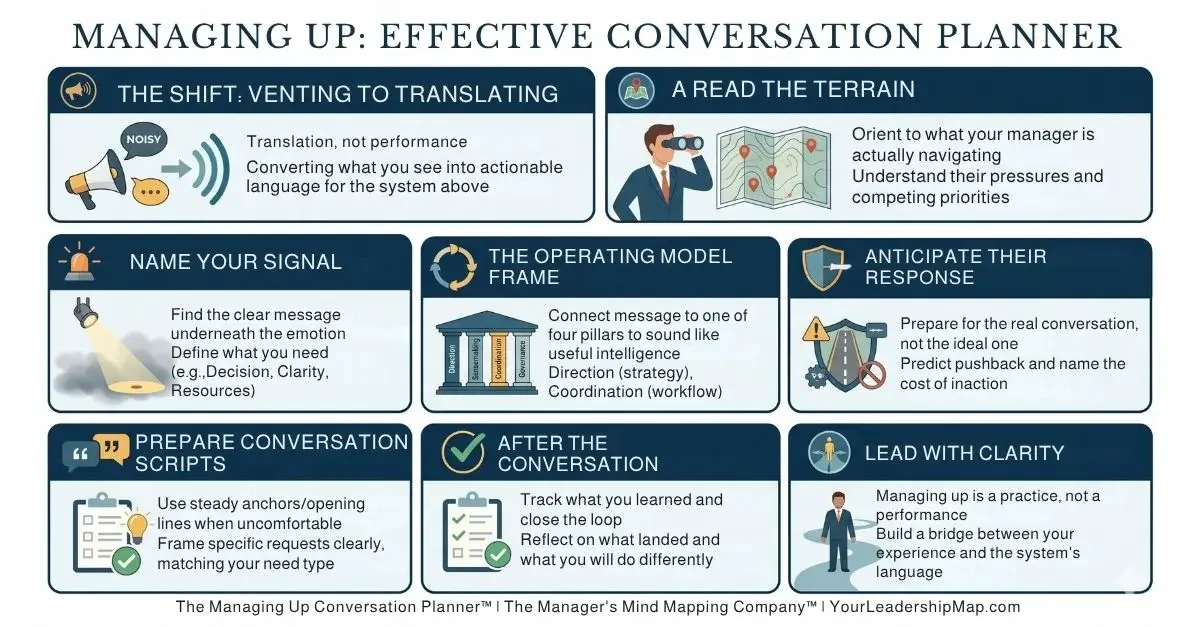
Managers sit closer to the operational pattern. You can see where work is slowing down, where people are hesitating, where norms are shifting, and where silence is starting to cost the team. You are looking at the part of the system where strain first becomes visible.
That does not mean leadership above you is careless. It means your read has to travel upward cleanly. When the issue reaches the room as concern, frustration, or a loose pattern, it often stays there. Executives need the situation stated clearly, the cost made visible, and a next move that is concrete enough to discuss.
Without that structure, the conversation stays polite and the problem stays in circulation.
What this costs when it stays unclear
The obvious cost is the unresolved issue. Work slows down. Decisions drift. Risk stays in the system longer than it should.
There is another cost that lands on the manager carrying the read. After enough non-response, you start questioning your own judgment. You replay what you said. You get more careful. You start cutting important observations short because you do not want to sound reactive, political, or over-involved.
Your team sees that too. They notice when concerns move upward and disappear. They notice when patterns continue after they were raised. Over time, that changes what people believe about whether speaking up matters.
What changes when the issue is clear enough to travel upward
Once the situation is stated in a form leadership can work with, the conversation changes shape. The room has something to respond to. The issue has edges. The cost is visible. The next move is on the table.
That does not guarantee agreement. It does give the discussion a usable structure.
You already have the raw material. You have been watching the work closely enough to see the pattern. What matters now is preparation. The read has to be translated into something decision-makers can pick up quickly and respond to without doing the interpretation work themselves.
The Exec-Room Fluency Toolkit
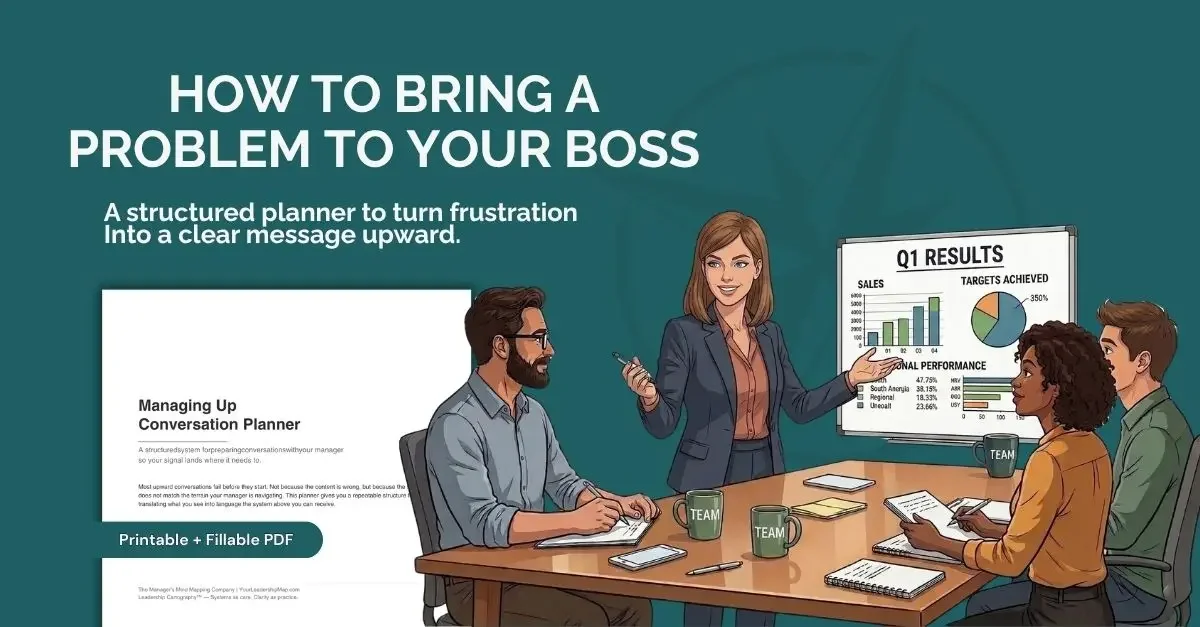
A structured PDF planner for managers who are doing the reading but can't get it received. It walks you through the framing work before you go into the meeting, taking what you've observed and organizing it into a form executives can use.
The toolkit gives you a planning structure that organizes what you already know into the shape executives are looking for. You go in with the situation stated, its cost clear, and a next move on the table. That's the difference between a flag that gets noted and a conversation that produces a decision.
What the toolkit includes:
A situation framing template that moves from pattern observation to a clear statement of the issue
A cost articulation prompt that helps you name the real stakes without overstating or underplaying them
A solution framing guide for presenting your proposed next move in language executives can act on
A preparation section for anticipating the questions executives will likely raise before you get there
A communication review checklist to use before the meeting, not after
Is This Tool for You?
This toolkit is for the manager with a clear read on the terrain who can't get it received. If you've raised something and walked out with a nod instead of a decision, this is the preparation you're missing.
Situations requiring HR involvement, or where an issue is already in process, are outside its scope. It's a preparation structure. The conversation is still yours to lead.
Choose Your Next Route
A tool only works if it fits the hand using it.You have the tactical fix for the friction. Now, make sure you know how to wield it. Get Your Map to see how your inherent orientation interacts with this terrain.

If the pattern has been repeating and you need to understand the terrain beneath it, go to the Managing Up Map. Use it when one conversation isn't the issue but, the dynamic is.
For the full library of manager tools, visit the Supply Post.