
Who Actually Built Your Career Ladder? The History of the Career Path
In the early 1900s, choosing a job was rarely a choice at all. Most people did what their fathers did or took whatever manual labor was available in their immediate vicinity. This changed in 1908 when a man named Frank Parsons opened the Breadwinner's Institute in Boston. He is often called the "Father of Vocational Guidance" because he believed that a person's work should align with their specific talents and interests.
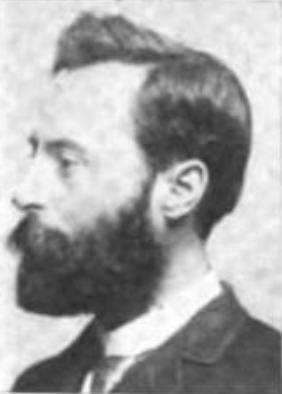
Frank Parsons, Father of Vocational Guidance
Parsons saw a problem: the Industrial Revolution was booming, but the workers were miserable and inefficient. People were being square pegs in round holes, forced into roles they weren't suited for simply because there was no system to guide them. He realized that for a modern society to function, it needed a method to match the person to the path.
The Job Description: The Vocational Counselor
Before the concept of a career path existed, there were no counselors. There were only masters and apprentices.
The Apprentice: A young person bound by legal contract to a master craftsman. Their path was locked for seven years. They didn't choose their specialty based on passion; they chose it based on which local guild had an opening. They weren't building a career; they were inheriting a trade.
The Vocational Counselor: This was the new role Parsons created. The counselor’s job was to interview the worker, analyze their aptitudes, and look at the industrial landscape to find a match. It was the first time work was treated as something that could be mapped out in advance.
This was a radical shift. It moved work from a matter of survival to a matter of strategy. But it also introduced a new kind of pressure: the idea that if you didn't find the right path, you were failing the system.
The Rise of the Career Ladder
As management theories evolved, especially with the help of Peter Drucker in the mid-20th century, the career path became more than just a starting point. It became a ladder. Drucker introduced the idea of the knowledge worker—someone whose primary value is their head, not their hands.
To manage these new workers, companies created rigid hierarchies. You started as a Junior Associate, moved to Senior, then Manager, then Director. The path was no longer about your individual talent; it was a pre-built track designed to keep the corporate engine running. The system needed you to keep climbing, regardless of whether the view from the next rung was actually what you wanted.
The Modern Correlation: From Ladders to Cartography
Today, the linear career ladder is breaking. We are seeing a return to Parsons’ original idea, but with a modern twist. Instead of one straight line, we talk about career lattices or portfolios.
In my work with Leadership Cartography™, I see this every day. Managers are realizing that the old maps, the ones that say do X to get Y promotion, don't work in a world of remote work and rapid automation. We are moving away from following a pre-drawn path and toward a practice of leadership mapping.
Just as the early 20th-century workers had to learn to navigate the shift from the farm to the factory, modern leaders have to navigate the shift from corporate compliance to individual identity. We are no longer just earners looking for a trade; we are cartographers trying to make sense of a landscape that changes every week. We use feedback and friction as signals to decide our next move, rather than just climbing because there is a ladder in front of us.
The career path was invented to make the industrial system more efficient by putting the right people in the right slots. It was a tool of management, not necessarily a tool of fulfillment.
If the path you are currently walking was designed by someone else to serve a system you didn't create, whose life are you actually living?
1️⃣ Identify Your Terrain: Are you a manager who feels stuck on a rigid career ladder? Use the Discovery Toolkits to see if you are leading with Heart™, Support™, Purpose™, Together™, or Precision™.
2️⃣ Equip Your Team: Stop being the manual switch for every task. The Peer to Leader Transition Plan for New Managers was designed for this exact moment. Use it to give your team the scripts and frameworks they need to solve their own friction so you can stop doing their work for them.
3️⃣ Sustain the Transformation: Don't navigate the dark alone. Join The Map Drawer™ subscription for monthly tools to build a steady leadership system.