
The End of the Manufacturing Age: And the Identities We Built Inside It
A grounded look at how the manufacturing age shaped our identities — and what leaders must understand as we enter the era of interpretation. Old models focused on control.
Modern work demands managers who can read systems, adapt, and lead through complexity with steadiness.
For more than a century, work in the Western world has been organized around one idea: productivity equals worth. That logic shaped everything from our companies to our expectations, to our leadership models, and most of all, to our precious identities.
We’ve inherited a worldview built for factories, not human beings.
And now, with the rise of AI, we’re all watching that worldview crack. Sending all sorts of stories to the docket about how AI is now taking your job and making it obsolete. You should be afraid…and people are clicking those stories like their life depends on it.
Honestly, what we are witnessing is the end of the golden manufacturing age. With that the end of the identities we’ve built inside it.
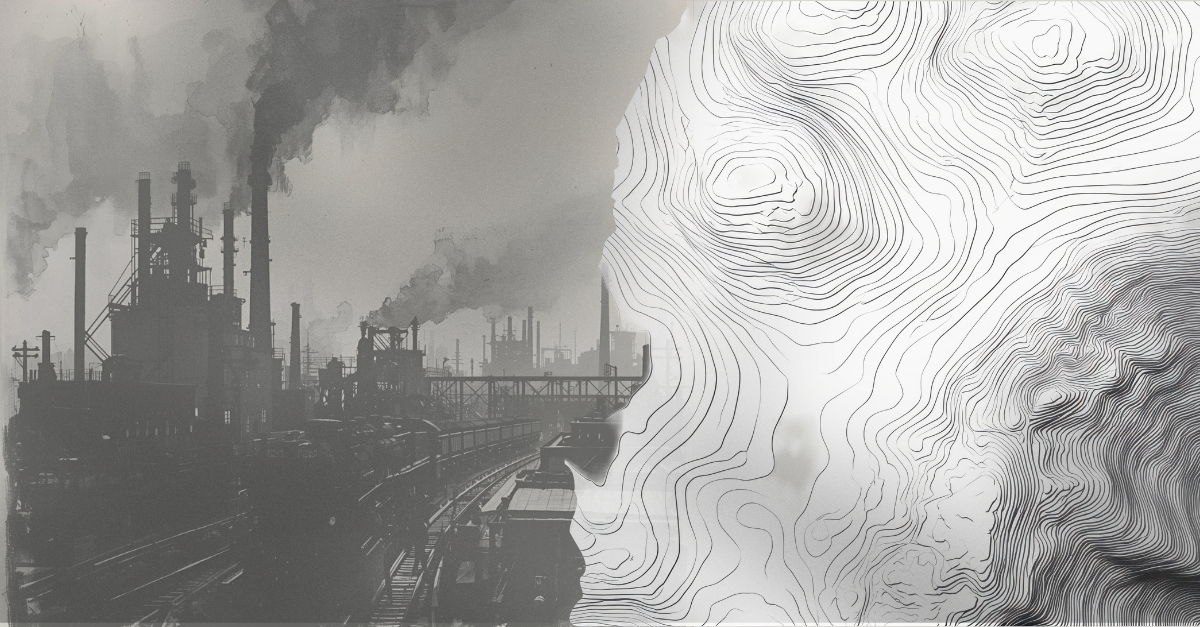
The Manufacturing Age Didn’t Just Change Work, It Changed Who We Thought We Had to Be
Industrialization reorganized human life and how we react around output:
Speed became a virtue.
Predictability became security.
Standardization became safety.
Efficiency became identity.
Repetition became mastery.
Even if you’ve never set foot in a factory, this logic has shaped you.
It shapes the way leaders are groomed:
produce more, faster, with fewer errors, and prove your value through volume. Equivalent to the old saying, “The proof is in the pudding.”
For decades, we’ve treated humans like reliable machines. Measured, optimized, reviewed, and managed through the lens of production.
And most of us built our self-worth to match and even mimic it.
But the world we’ve built our identities for is dissipating with each AI advancement.
AI Is Replacing Manufacturing Logic
AI isn’t breaking the system.
It’s exposing the truth the system was built on:
If productivity is equal to your identity, you will always feel replaceable.
In other words, if you continue to measure your self-worth and effectiveness through how well you do something, you will be out paced and outperformed by AI.
And in a world where machines outpace humans on:
accuracy
speed
scale
pattern recognition
task repetition
we’re discovering the uncomfortable truth:
We aren’t valued for being relational beings.
We are valued for being efficient humans.
That era is ending.
The collapse is destabilizing for a lot of people right now but, there is a missed opportunity emerging.
The Next Era Is Not Productivity-Based
The scarcity model is shifting.
What’s rare today isn’t output. It’s so abundant we can’t interpret it fast enough. (sciences’ current problem with AI advances).
It’s our capacity to:
bring emotional steadiness under pressure
use judgment and discernment
apply relational intelligence
interpret complexity
deliver truths others avoid
and bring the maturity to hold another person’s experience
This is not the skill set the manufacturing age rewarded. Think of why The Jungle was written (Upton Sinclair, 1906) — a direct exposé of manufacturing-age exploitation and the human cost of productivity-as-identity.
And it’s exactly why so many leaders feel unmoored right now.
They were trained for production and efficiency, the very thing AI outpaces us on already.
Here is the real pivot point:
Machines can produce.
We must interpret, guide, deliver tough news, hold space for grief and loss.
AI may detect the cancer no one else sees.
But it cannot sit with the patient as their world falls apart.
It cannot walk them through fear, meaning, grief, and hope. It can’t discuss the best treatment options given the person’s feelings about it.
This requires human interaction and relationship, not productivity.
We Are Entering the Age of Interpretation
Leaders and Professionals (experts) are being asked to shift from:
doing → discerning
output → presence
expertise → identity
repetition → relational maturity
This is not a soft skill era. Do not make that misinterpretation.
This is a human capacity era.
And it requires a completely different map.
You can no longer lead from what you know.
You must lead from who you are.
This is the work of Leadership Cartography — the internal terrain that determines how a leader navigates external complexity.
When machines carry the technical load, humans must carry the emotional, relational, and psychological load.
That’s not less work.
It’s much, much…deeper work.
Decode Your Leadership Identity
The world is shifting from productivity-based value to identity-based leadership.
If you want to understand your internal map — the part AI can’t outpace — start here.
A grounded tool to understand who you are in an era no longer defined by productivity.
What This Shift Means for Managers Right Now
Lets just say, if we know the manufacturing age shaped your identity, this moment will feel disorienting. That makes complete sense.
Here is what I want you to know:
You don’t need to become more productive.
You do need to become more relational to others.
And that looks like:
developing emotional steadiness
grounding yourself before grounding others
building the capacity to hold difficult conversations
staying present when someone else is unraveling
learning to interpret signals, not just deliver output
strengthening your sense of identity beyond performance
These are not traits.
They are trainable competencies.
They are the new mastery. And this is your new mission if choose to accept it.
The manufacturing age made us productive.
AI is accelerating its end.
Now we’re being invited — pushed, really — into a new era:
The Age of Interpretation.
An era where identity becomes the new output, where maturity becomes the new mastery, and where leading others begins with the ability to lead yourself.
This isn’t the collapse of human value.
It’s the return to it.
Q: Why is the manufacturing age relevant to modern leadership?
Because it created the productivity-based identity model managers still operate from, even though today’s complexity requires relational and interpretive skills.
Q: Will AI replace leaders or managers?
AI replaces productivity; it does not replace relational maturity or human judgment — the core of the emerging leadership era.
Q: What does “Age of Interpretation” mean?
It describes the shift from output-based value to identity-based leadership, where emotional steadiness and discernment matter more than task mastery.