
Most of what you remember happened this fall. Get the rest of the year back before you write.
If the reminder hasn’t come yet, it will soon. For a lot of managers, reviews are due before the holidays. You’ll block an afternoon, open the form for the first person on your team, and start typing what comes to mind.
What comes to mind is mostly October and November: the project that slipped last month, the meeting where they pushed back. The win from March is still in your inbox somewhere, but with six more reviews to write, you probably won’t go looking for it.
Why the review ends up covering six weeks
You remember recent weeks in detail and earlier months in outline. So the review describes the last stretch of the year, and your employee reads it as your judgment on all 12 months.
Someone who had a strong spring and a rough fall gets a rough review. Someone who coasted until September and finished strong gets a good one. Neither review is accurate, and both people can tell.
Gallup found that only 14% of employees strongly agree their performance reviews inspire them to improve. A review that covers six weeks and calls it a year gives people little reason to be in that 14%.
Get the year back before you write
Before you open the form, spend 20 minutes per person pulling the year together:
Go through your one-on-one notes or calendar month by month and list what they worked on.
Search your email and chat for their name, and pull the wins and the problems with dates.
A week before you meet, ask them to send you their own list of what they finished this year.
The last one does the most. Your employee remembers their year better than you do, and asking tells them the review will cover all of it.
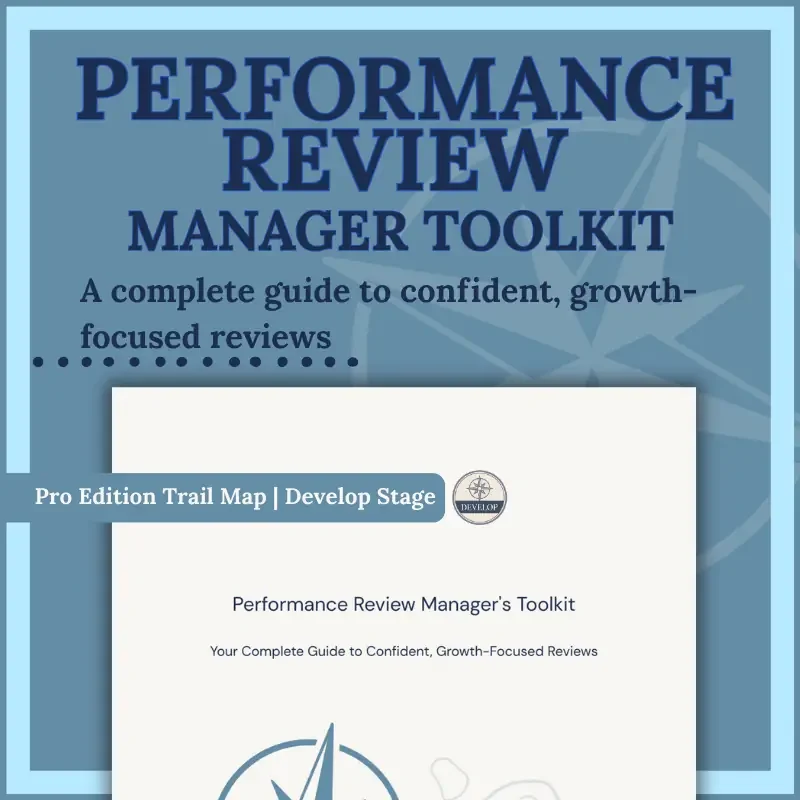
Turn performance reviews from stressful obligations into steady, growth-focused conversations.
This complete toolkit gives you:
The 3 Landmarks Framework to orient any review
A Pre-Review Checklist and employee prep email
A 60-Minute Review Structure with scripts and questions
The Clear Feedback Map™ for constructive conversations
Troubleshooting guidance for common challenges
Follow-up templates and a development planning worksheet
Designed for new managers and emerging leaders, this toolkit helps you Discover steady practices so reviews become a map for growth, not just a judgment.
Fillable, printable pages to use digitally or print out, use either way.
The Performance Review Manager’s Toolkit has the pre-review checklist and the prep email to send them, so you don’t have to write either from scratch.
Your boss is writing yours the same way
Your own review is coming from the same few weeks. If your best work this year happened in the spring, your boss may not remember it. Send them a short list before they start: what you finished, what changed because of it, and when. A list with dates gives them something accurate to write from.
How you write reviews follows how you lead
If you lead with Precision, you’ll want the record complete, and the risk is a review that reads like an audit. If you lead with Heart, you’ll want the conversation to go well, and the risk is softening the part they most need to hear. Knowing which way you lean tells you what to check before you hit submit.
For the reviews on your list this month
If you have reviews due before the end of the year, the Performance Review Manager’s Toolkit covers the whole process:
A pre-review checklist and the prep email to send each employee
A 60-minute review structure with scripts and questions
The Clear Feedback Map™ for the hard parts of the conversation
Follow-up templates and a development planning worksheet
Fillable, printable PDF.Use it for every review on your list this year. If you do one thing this week, send each person the prep email asking for their list. It’s in the toolkit, ready to copy.